
Selank and GABA: Findings from the IMR-32 Cell Study
A detailed review of the IMR-32 neuroblastoma cell study examining Selank alone and in combination with GABA, focusing on gene expression changes in the GABAergic system. Evidence is limited to in vitro findings and does not imply clinical effects.

Introduction
Selank is a synthetic peptide developed as an analog of the immunopeptide tuftsin. It has been studied for its potential regulatory effects on the nervous system, particularly in relation to the gamma-aminobutyric acid (GABA) neurotransmitter system. The IMR-32 study investigated Selank’s impact on gene expression in human neuroblastoma IMR-32 cells, both alone and in combination with GABA, to elucidate possible molecular mechanisms underlying its reported neuropharmacological effects. This review provides a detailed, evidence-based analysis of the findings from this in vitro study, strictly distinguishing laboratory results from any clinical implications.
Study Design and Methods
The IMR-32 study utilized a human neuroblastoma cell line (IMR-32), which expresses functional GABA_A receptors, to examine the effects of Selank, GABA, olanzapine, and their combinations on the expression of 84 genes involved in GABAergic neurotransmission and related processes. The experimental protocol involved incubating IMR-32 cells for one hour with each test compound or combination, followed by quantitative PCR (qPCR) analysis to assess changes in mRNA levels. Genes with low expression (Cq > 35) were excluded, resulting in 69 genes analyzed for differential expression Source 1.
Selank Alone: Lack of Direct Effect on GABAergic Gene Expression
When IMR-32 cells were treated with Selank alone, the study found no statistically significant changes in the mRNA levels of any of the 69 genes analyzed. This suggests that, under the conditions tested, Selank does not directly modulate the transcription of genes involved in the GABAergic system in this cell line. The authors noted that this absence of effect could be related to the specific subunit composition of GABA_A receptors in IMR-32 cells, which may not be optimal for Selank’s interaction Source 1.
GABA Alone: Broad Downregulation of GABAergic Genes
In contrast, treatment with GABA alone resulted in significant changes in the expression of 14 genes, with the majority (11) showing decreased mRNA levels. Notably, three genes (GABRG2, GABRA5, and GNAQ) exhibited increased expression. These findings are consistent with GABA’s role as the primary inhibitory neurotransmitter in the central nervous system and its capacity to modulate its own receptor and related gene expression in neuronal cells Source 1.
Selank and GABA Combined: Suppression of GABA-Induced Changes
The most striking finding emerged when Selank and GABA were applied together. The combination led to a near-complete suppression of the gene expression changes observed with GABA alone. Specifically, only one gene (JUNB) showed a significant change (a 1.7-fold decrease in mRNA), compared to 14 genes altered by GABA alone. This suggests that Selank may interfere with or modulate the cellular response to GABA at the level of gene expression, potentially by affecting GABA’s interaction with its receptor or downstream signaling pathways Source 1.
Mechanistic Considerations and Hypotheses
The authors of the IMR-32 study hypothesized that Selank’s ability to suppress GABA-induced gene expression changes could be due to allosteric modulation of the GABA_A receptor. Previous research indicated that Selank can alter the affinity of GABA for its receptor, possibly by binding to an allosteric site and modifying receptor conformation. However, the lack of direct gene expression effects by Selank alone in IMR-32 cells suggests that this modulation is context-dependent and may require the presence of endogenous or exogenous GABA Source 1.
It is important to note that the IMR-32 cell line expresses a limited set of GABA_A receptor subunits (primarily α3, β1, β3, and γ2), which may not fully recapitulate the diversity of GABA_A receptors in native human neurons. This limitation could influence the observed effects and their generalizability.
Comparison with Other Preclinical Models
While the IMR-32 study provides detailed in vitro data, other preclinical studies have explored Selank’s effects in animal models. For example, in rodent studies, Selank has been shown to alter gene expression in the frontal cortex and hippocampus, and to modulate behavioral responses to stress and anxiolytic drugs. However, these findings are not directly comparable to the IMR-32 cell results, as they involve complex in vivo systems with multiple interacting cell types and signaling pathways Source 2. The IMR-32 study’s focus on a single cell line allows for controlled mechanistic investigation but limits extrapolation to whole-organism or clinical contexts.
Limitations of the IMR-32 Study
Several important limitations must be considered when interpreting the IMR-32 findings:
- In vitro context: The study was conducted in a human neuroblastoma cell line, which may not fully represent the physiology of mature human neurons or brain tissue.
- Receptor subunit composition: The restricted GABA_A receptor subunit repertoire in IMR-32 cells may affect Selank’s ability to interact with the receptor and modulate gene expression.
- Short incubation period: The one-hour exposure may not capture longer-term or delayed transcriptional effects.
- Gene expression endpoints: Changes in mRNA levels do not necessarily translate to changes in protein expression or functional outcomes.
- No direct functional assays: The study did not assess electrophysiological or receptor binding changes, focusing solely on gene expression.
These factors underscore the need for caution in interpreting the results and highlight the importance of complementary studies in other models.
Unresolved Questions and Research Gaps
The IMR-32 study raises several questions that remain unanswered:
- Mechanism of suppression: The precise molecular mechanism by which Selank suppresses GABA-induced gene expression changes is not fully elucidated.
- Receptor specificity: It is unclear whether Selank’s modulatory effects are specific to certain GABA_A receptor subtypes or require particular subunit compositions.
- Translation to in vivo systems: The relevance of these in vitro findings to animal or human neurobiology is uncertain, given the complexity of the brain’s cellular environment.
- Functional consequences: The impact of altered gene expression on neuronal function, synaptic transmission, or behavior was not addressed in this study.
Further research, including studies in primary neuronal cultures, animal models, and eventually controlled human investigations, is needed to clarify these issues.
Summary and Key Takeaways
- Selank alone did not alter GABAergic gene expression in IMR-32 neuroblastoma cells under the tested conditions.
- GABA alone downregulated multiple genes involved in the GABAergic system, consistent with its known biological activity.
- Selank combined with GABA suppressed most GABA-induced gene expression changes, with only one gene (JUNB) remaining significantly altered.
- The findings suggest a possible modulatory interaction between Selank and GABA at the receptor or signaling level, but the exact mechanism remains unclear.
- All results are limited to in vitro cell culture and do not provide evidence for clinical efficacy, safety, or regulatory approval.
- No dosing, administration, or therapeutic recommendations can be made based on these data.
Evidence Limitations and Responsible Interpretation
The IMR-32 study provides valuable mechanistic insights into Selank’s potential interactions with the GABAergic system at the level of gene expression in a specific cell line. However, the results should not be extrapolated to infer human benefits, safety, or therapeutic potential. The absence of direct effects by Selank alone, and the context-dependent modulation observed with GABA, highlight the complexity of peptide-receptor interactions and the need for further research in more physiologically relevant systems.
For research and educational purposes only. Not medical advice. Research products are not for human or veterinary use.
Sources
- GABA, Selank, and Olanzapine Affect the Expression of Genes Involved in GABAergic Neurotransmission in IMR-32 Cells - PMC: https://pmc.ncbi.nlm.nih.gov/articles/PMC5328971/
- Peptide Selank Enhances the Effect of Diazepam in Reducing Anxiety in Unpredictable Chronic Mild Stress Conditions in Rats - PMC: https://pmc.ncbi.nlm.nih.gov/articles/PMC5322660/
Continue exploring
- Joint Analysis of Respiratory Exchange Ratio, Heat Production, and Food Intake in MOTS-c-Treated Mice: Evidence from Preclinical Research
- Extracellular Acidification Rate as a Glycolytic Readout in the MOTS-c Study: Technical and Experimental Insights
- Folic Acid Rescue in MOTS-c Cellular Experiments: Mechanistic Insights and Research Context
TRACE THE EVIDENCE
Sources & further reading
RELATED PRODUCT INFORMATION
From the Certified Pep catalog.
Product references are informational, not a recommendation for human use. Prices and availability must be verified at retailer checkout.
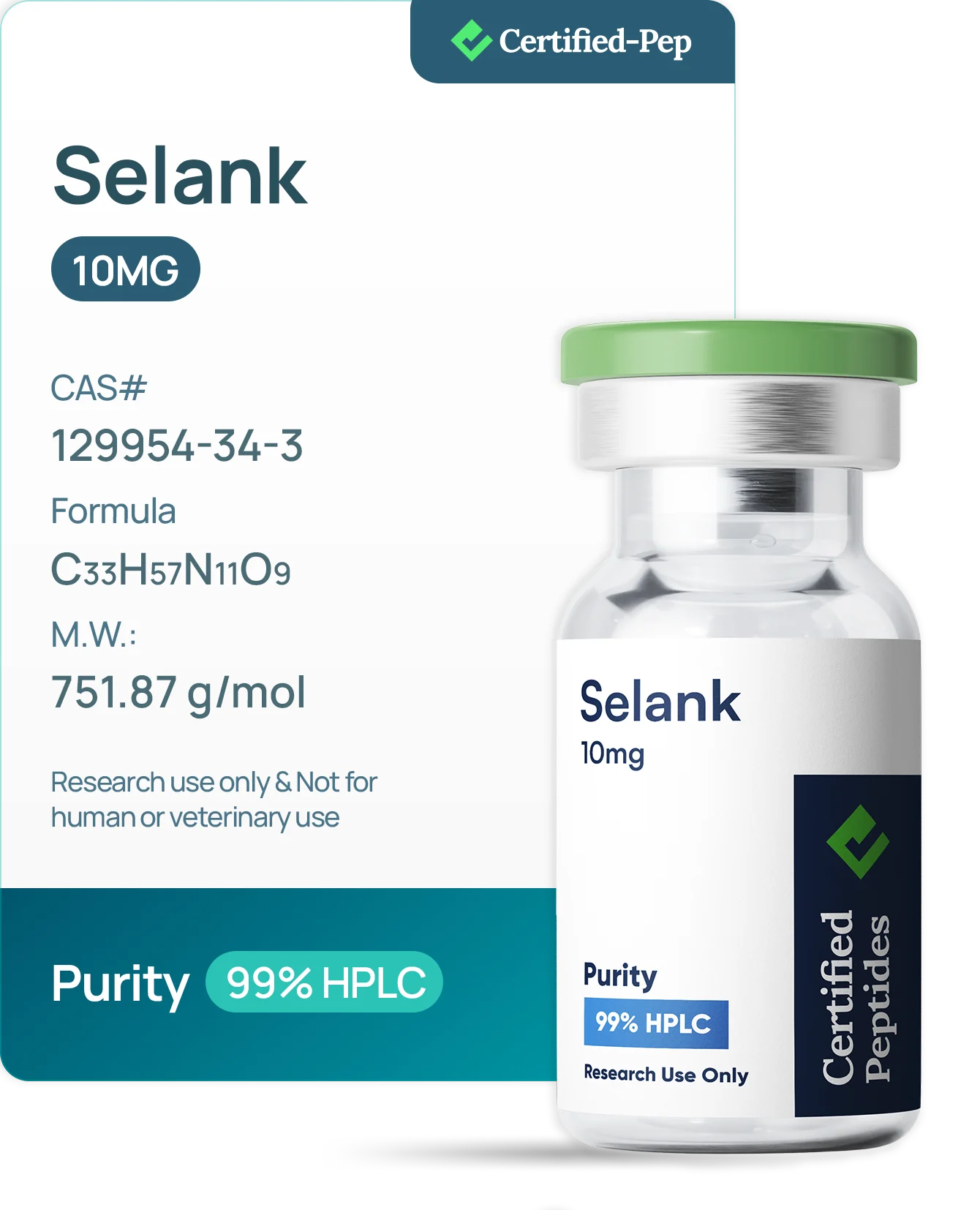
SELANK 10 MG
USD 50.00
In stock
Last synced: 2026-11-01 10:07
Add to retailer cart ↗View product details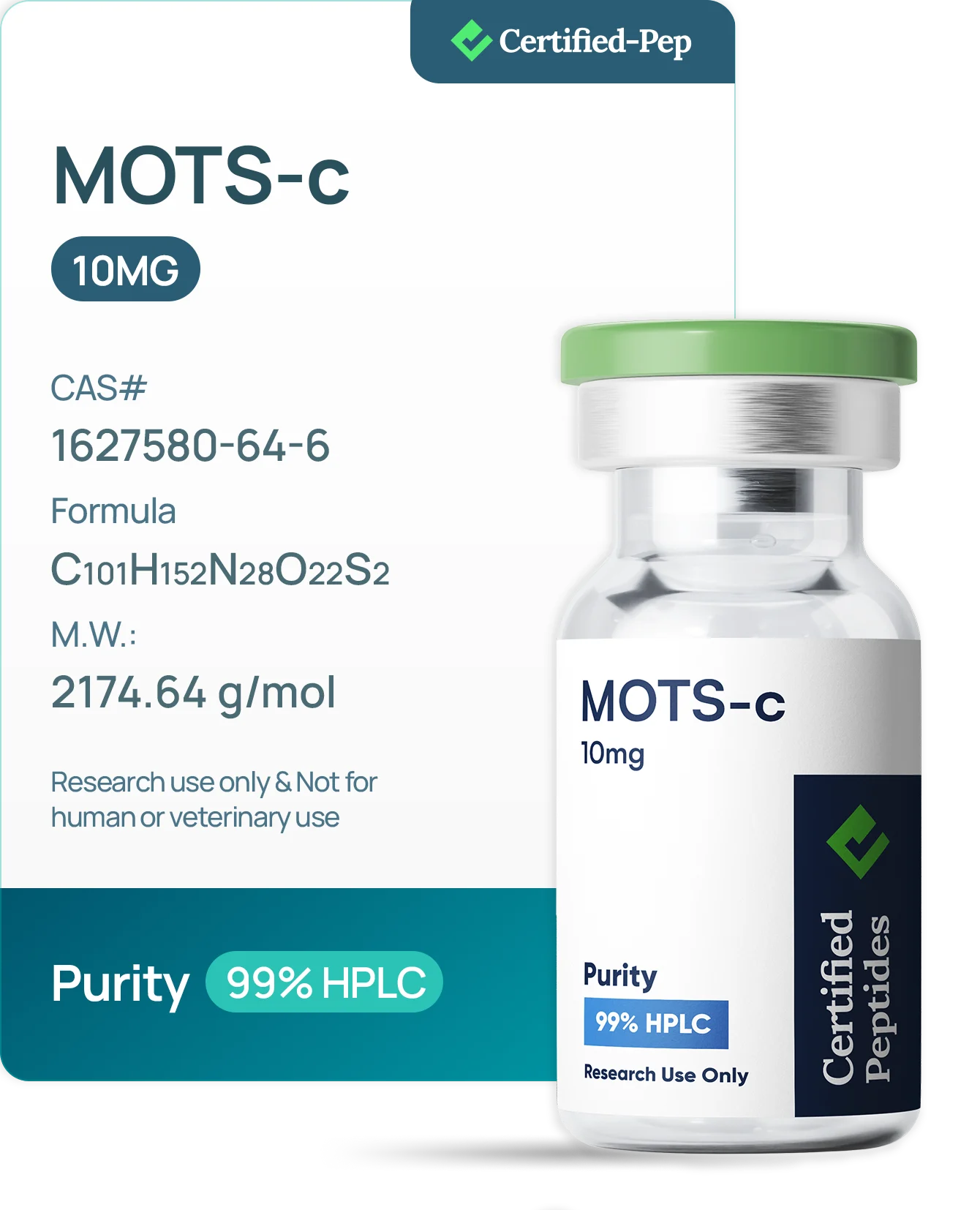
MOTS C 10MG
USD 58.00
In stock
Last synced: 2026-11-01 10:07
Add to retailer cart ↗View product details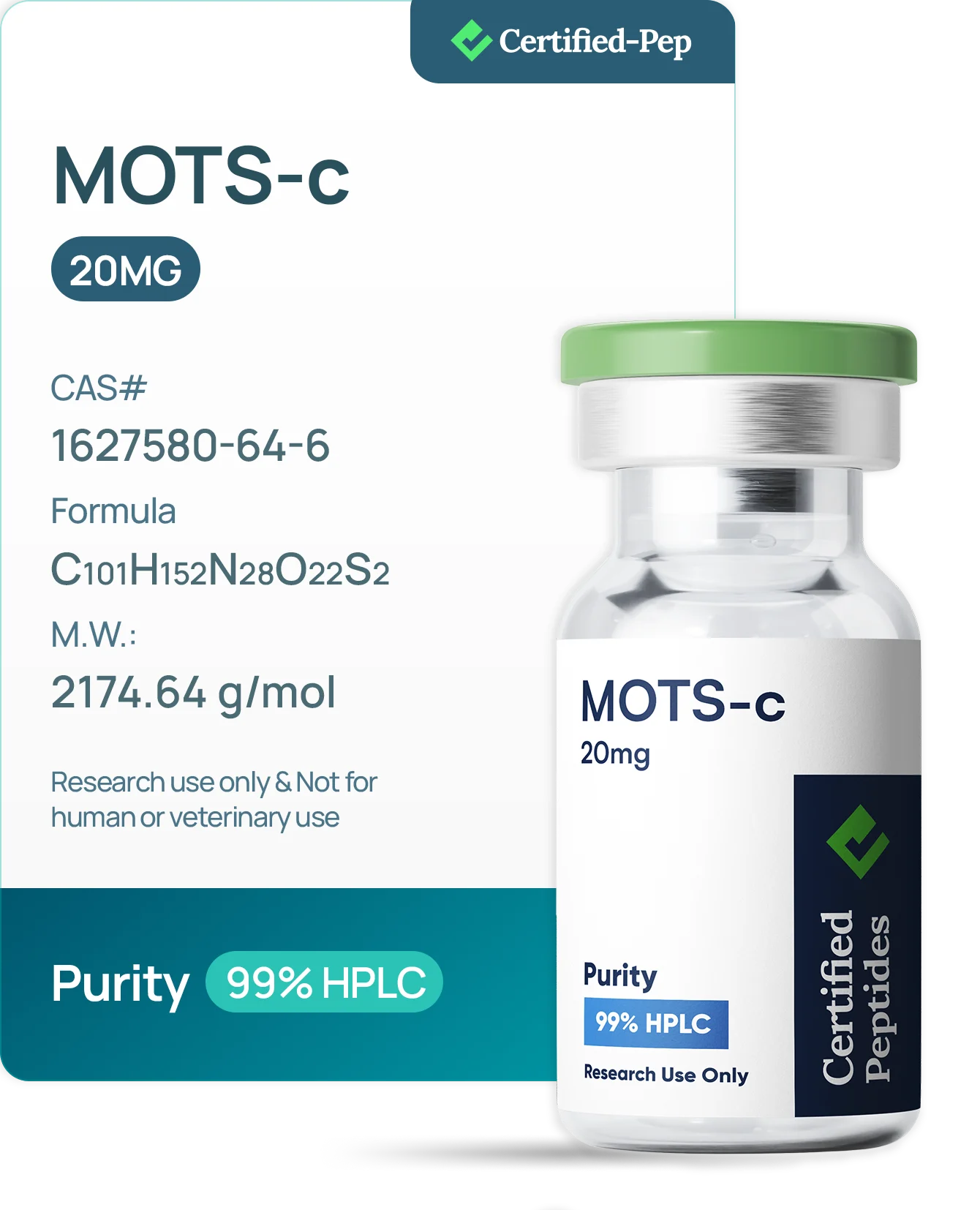
MOTS C 20MG
USD 90.00
In stock
Last synced: 2026-11-01 10:07
Add to retailer cart ↗View product details
MOTS C 40MG
USD 160.00
In stock
Last synced: 2026-11-01 10:07
Add to retailer cart ↗View product details