
Joint Analysis of Respiratory Exchange Ratio, Heat Production, and Food Intake in MOTS-c-Treated Mice: Evidence from Preclinical Research
This resource examines how respiratory exchange ratio, heat production, and food intake collectively inform metabolic effects in MOTS-c-treated mice, based strictly on animal research. It details experimental findings, mechanistic insights, and limitations, without extrapolating to human outcomes.

Direct Answer: What Do Respiratory Exchange Ratio, Heat Production, and Food Intake Jointly Show in MOTS-c-Treated Mice?
In a controlled animal study, MOTS-c-treated mice exhibited an increased respiratory exchange ratio (RER), elevated heat production, and unchanged food intake compared to controls when fed a high-fat diet. These findings, taken together, indicate a shift toward greater carbohydrate utilization and increased energy expenditure, independent of caloric intake changes. The results suggest that MOTS-c modulates whole-body metabolism in mice by promoting glucose usage and thermogenesis, rather than by suppressing appetite or reducing food consumption. These conclusions are limited to preclinical models and do not establish efficacy or safety in humans Source 1.
Introduction: MOTS-c and Metabolic Regulation in Animal Models
MOTS-c (mitochondrial open-reading-frame of the twelve S rRNA type-c) is a mitochondrial-derived peptide identified as a regulator of metabolic homeostasis in preclinical research. Its discovery has expanded the understanding of mitochondrial signaling beyond energy production, implicating mitochondrial peptides in systemic metabolic regulation. MOTS-c has been shown to influence insulin sensitivity, glucose metabolism, and energy balance in animal models, particularly under metabolic stress such as high-fat diet feeding Source 1.
The respiratory exchange ratio (RER), heat production, and food intake are key physiological parameters used to assess changes in substrate utilization, energy expenditure, and feeding behavior. Joint analysis of these endpoints provides a comprehensive view of how interventions like MOTS-c affect whole-body metabolism in vivo. This article synthesizes the reported findings from a pivotal animal study, focusing on the interplay between these parameters in MOTS-c-treated mice.
Experimental Design: Assessing Metabolic Outcomes in MOTS-c-Treated Mice
The referenced study employed outbred CD-1 male mice subjected to a high-fat diet (HFD, 60% calories from fat) to induce metabolic stress. Mice were administered MOTS-c (0.5 mg/kg/day, intraperitoneally) or vehicle control for up to eight weeks. Key metabolic endpoints included:
- Respiratory Exchange Ratio (RER): The ratio of CO₂ produced to O₂ consumed, indicating the predominant fuel source (carbohydrate vs. fat).
- Heat Production: A measure of total energy expenditure, reflecting thermogenic processes.
- Food Intake: Quantified daily to determine if changes in body weight or metabolism were attributable to altered caloric consumption.
These endpoints were measured using indirect calorimetry and standard metabolic cages, allowing for precise monitoring of metabolic changes over time Source 1.
Respiratory Exchange Ratio: Evidence for Increased Carbohydrate Utilization
RER is a well-established indicator of substrate preference: values near 0.7 suggest predominant fat oxidation, while values approaching 1.0 indicate carbohydrate oxidation. In the cited study, MOTS-c-treated mice on a high-fat diet displayed a significantly higher RER compared to vehicle-treated controls. This shift implies that MOTS-c promotes a metabolic state favoring glucose utilization over fatty acid oxidation, even in the context of a lipid-rich diet.
The increase in RER was not accompanied by changes in physical activity, as total activity levels were comparable between groups. This suggests that the observed shift in substrate utilization was not secondary to increased movement but rather a direct effect of MOTS-c on metabolic pathways Source 1.
Heat Production: Enhanced Energy Expenditure Independent of Activity
Heat production, as measured by indirect calorimetry, was significantly elevated in MOTS-c-treated mice relative to controls. This increase in thermogenesis occurred without a corresponding rise in physical activity, indicating that MOTS-c enhances basal metabolic rate or stimulates non-shivering thermogenesis.
The elevated heat production may contribute to the prevention of diet-induced obesity observed in these mice, as increased energy expenditure can offset caloric surplus. However, the precise mechanisms underlying this thermogenic effect—such as potential activation of brown adipose tissue or mitochondrial uncoupling—were not directly investigated in the referenced study and remain to be elucidated Source 1.
Food Intake: No Significant Change Despite Metabolic Shifts
A critical aspect of the study was the careful measurement of food and caloric intake. MOTS-c-treated and control mice consumed equivalent amounts of food and calories throughout the intervention period. This finding is essential for interpreting the metabolic effects of MOTS-c, as it rules out reduced caloric intake as a confounding factor in the observed prevention of obesity and metabolic improvements.
The lack of appetite suppression or hypophagia suggests that MOTS-c’s effects on body weight and metabolism are mediated through increased energy expenditure and altered substrate utilization, rather than through changes in feeding behavior Source 1.
Integrated Interpretation: Joint Implications of RER, Heat Production, and Food Intake
When considered together, the increased RER, elevated heat production, and unchanged food intake in MOTS-c-treated mice provide a coherent picture of metabolic reprogramming. Specifically:
- Increased RER indicates a shift toward carbohydrate (glucose) oxidation.
- Elevated heat production reflects increased energy expenditure, likely through enhanced thermogenesis.
- Unchanged food intake confirms that these effects are not due to reduced caloric consumption.
This constellation of findings supports the interpretation that MOTS-c enhances glucose utilization and energy dissipation, thereby counteracting the obesogenic and insulin-resistant effects of a high-fat diet in mice. The data suggest a mechanism involving increased metabolic flux through glycolytic and thermogenic pathways, independent of appetite regulation Source 1.
Mechanistic Insights: Potential Pathways Underlying Observed Effects
The study provides additional mechanistic context through in vitro and in vivo analyses. MOTS-c was shown to activate AMP-activated protein kinase (AMPK) and increase GLUT4 expression in skeletal muscle, both of which are associated with enhanced glucose uptake and utilization. The peptide also modulated the folate-methionine cycle and de novo purine biosynthesis, leading to accumulation of AICAR, a known AMPK activator.
These molecular changes are consistent with the observed physiological outcomes:
- AMPK activation promotes glucose uptake, fatty acid oxidation, and energy expenditure.
- GLUT4 upregulation facilitates glucose transport into muscle cells.
- Thermogenic pathways may be engaged downstream of AMPK, contributing to increased heat production.
However, direct measurements of brown adipose tissue activity or mitochondrial uncoupling proteins were not reported, leaving the precise thermogenic mechanism unresolved Source 1.
Limitations and Unresolved Questions
While the findings from this animal study are robust within the experimental context, several limitations must be acknowledged:
- Species and Model Specificity: All results are derived from mouse models; translation to other species or to humans is untested.
- Single Study Basis: The conclusions are based on a single, albeit comprehensive, study. Independent replication and extension are needed.
- Mechanistic Gaps: The exact cellular and molecular mechanisms underlying increased heat production and RER remain incompletely characterized.
- No Direct Human Data: There is no evidence regarding MOTS-c’s effects on RER, heat production, or food intake in humans.
- Potential Confounding Factors: Although activity and food intake were controlled, other unmeasured variables could contribute to observed effects.
These limitations underscore the need for further research, including mechanistic studies and eventual clinical investigation, before any conclusions about safety, efficacy, or therapeutic potential can be drawn Source 1.
Key Takeaways and Research Context
- MOTS-c is a mitochondrial-derived peptide that, in a controlled mouse study, increased RER and heat production without affecting food intake, indicating a shift toward glucose utilization and higher energy expenditure.
- These metabolic changes occurred independently of caloric restriction or increased activity, suggesting a direct effect on energy metabolism.
- The findings are limited to preclinical animal models; no claims regarding human effects, safety, or clinical utility are supported by current evidence.
- Further research is required to clarify mechanisms, replicate findings, and explore translational relevance.
For research and educational purposes only. Not medical advice. Research products are not for human or veterinary use.
Sources
- The Mitochondrial-derived peptide MOTS-c promotes metabolic homeostasis and reduces obesity and insulin resistance - PMC. https://pmc.ncbi.nlm.nih.gov/articles/PMC4350682/
Continue exploring
TRACE THE EVIDENCE
Sources & further reading
RELATED PRODUCT INFORMATION
From the Certified Pep catalog.
Product references are informational, not a recommendation for human use. Prices and availability must be verified at retailer checkout.
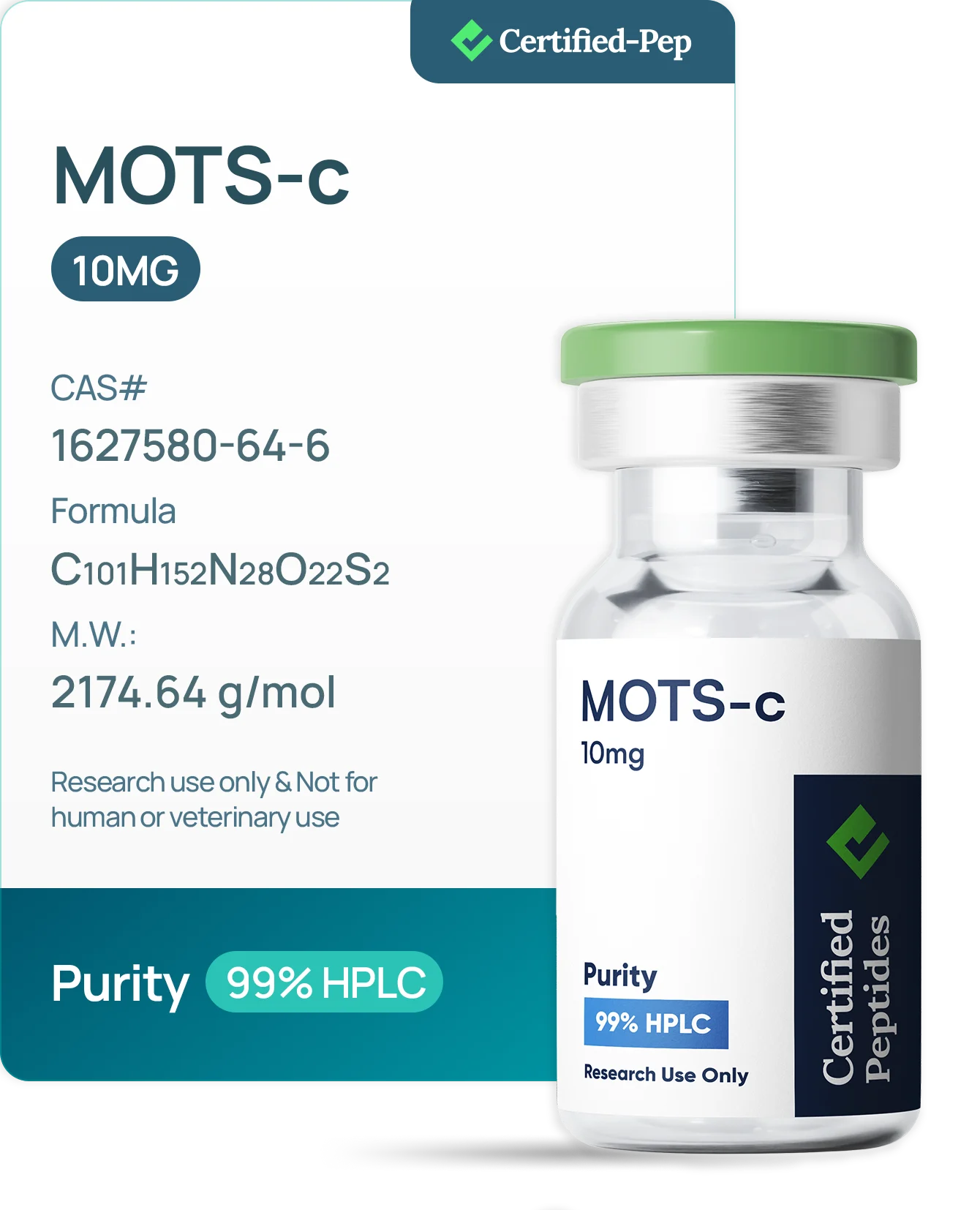
MOTS C 10MG
USD 58.00
In stock
Last synced: 2026-11-01 10:07
Add to retailer cart ↗View product details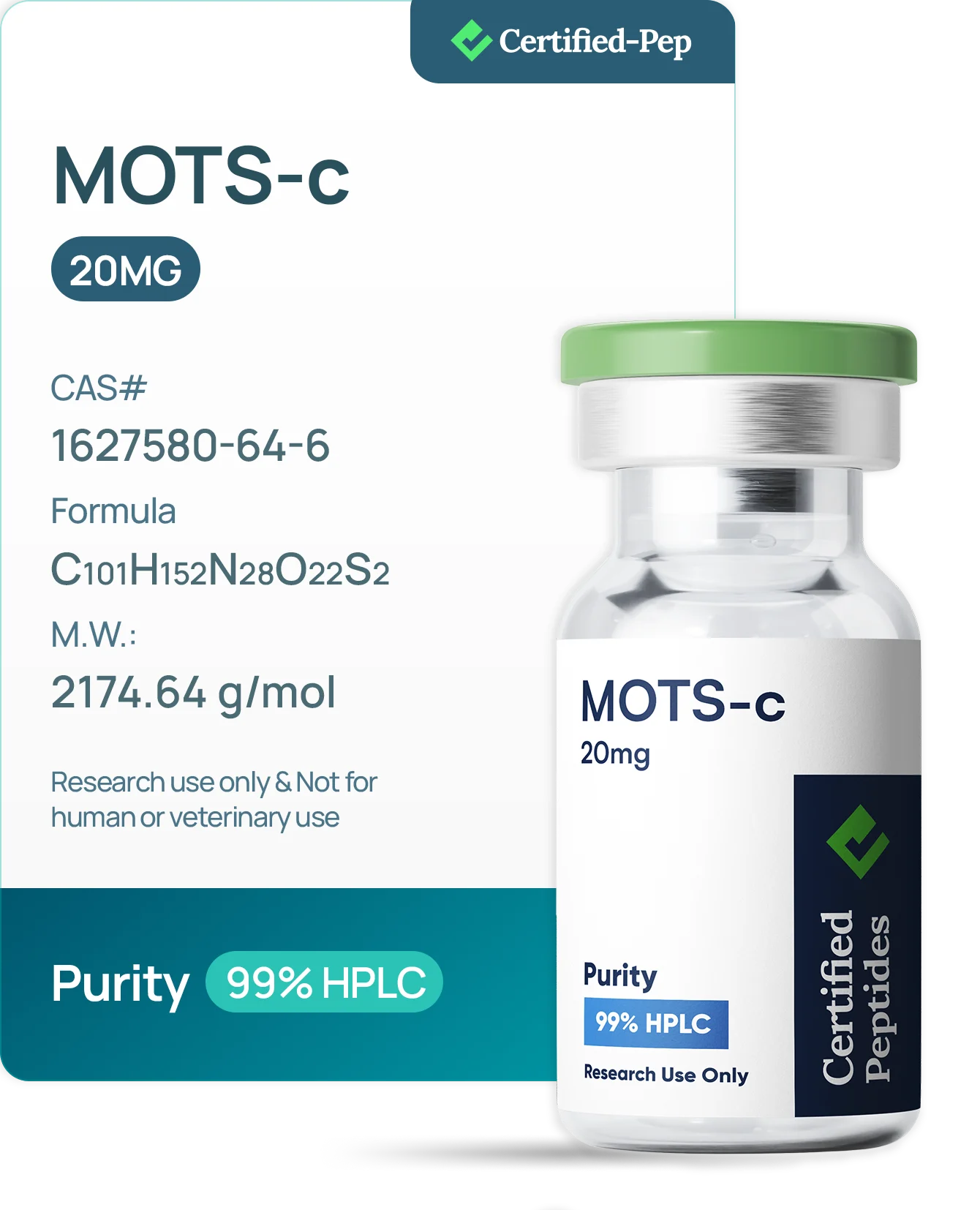
MOTS C 20MG
USD 90.00
In stock
Last synced: 2026-11-01 10:07
Add to retailer cart ↗View product details
MOTS C 40MG
USD 160.00
In stock
Last synced: 2026-11-01 10:07
Add to retailer cart ↗View product details