
Extracellular Acidification Rate as a Glycolytic Readout in the MOTS-c Study: Technical and Experimental Insights
This resource examines how the foundational MOTS-c study applied extracellular acidification rate (ECAR) measurements to assess glycolytic flux in cell models, detailing the methodology, findings, and limitations. It distinguishes in vitro results from broader clinical implications and highlights the mechanistic context of MOTS-c’s metabolic actions.

Direct Answer: How the MOTS-c Study Used Extracellular Acidification to Assess Glycolysis
In the foundational study on the mitochondrial-derived peptide MOTS-c, researchers used real-time measurements of extracellular acidification rate (ECAR) as a direct, quantitative proxy for glycolytic flux in cultured cells. ECAR was measured using a Seahorse XF Extracellular Flux Analyzer, which detects changes in pH in the culture medium resulting from the export of protons during glycolysis. By stimulating cells with glucose and monitoring ECAR, the study assessed both basal and maximal glycolytic capacity, providing mechanistic insight into how MOTS-c modulates cellular metabolism Source 1.
Introduction: MOTS-c and Cellular Metabolism
MOTS-c (mitochondrial open reading frame of the twelve S rRNA type-c) is a 16-amino acid peptide encoded by a short open reading frame within the mitochondrial 12S rRNA. It has been identified as a bioactive mitochondrial-derived peptide (MDP) that influences metabolic homeostasis, particularly by regulating insulin sensitivity and energy metabolism. The study in question sought to elucidate the cellular mechanisms underlying MOTS-c’s metabolic effects, focusing on its impact on glycolysis and related pathways Source 1.
A central question was whether MOTS-c could enhance glycolytic flux in cells, and if so, by what mechanisms. To address this, the researchers employed ECAR as a real-time, functional readout of glycolytic activity, complementing metabolomic and gene expression analyses.
Principles of Extracellular Acidification Rate (ECAR) Measurement
ECAR is a widely used surrogate for glycolytic flux in cell biology. During glycolysis, glucose is metabolized to pyruvate, which is then converted to lactate under anaerobic or high-flux conditions. This conversion is coupled with the export of protons (H+) into the extracellular medium, leading to acidification. The Seahorse XF Analyzer detects these pH changes, allowing for the quantification of glycolytic activity in real time.
In the MOTS-c study, ECAR was measured under several conditions: - Basal ECAR (reflecting steady-state glycolysis) - Glucose-stimulated ECAR (reflecting the cell’s capacity to upregulate glycolysis in response to substrate) - Oligomycin-stimulated ECAR (reflecting maximal glycolytic capacity, as oligomycin inhibits mitochondrial ATP synthesis, forcing cells to rely on glycolysis)
These measurements provided a dynamic profile of glycolytic function and allowed the researchers to dissect the specific effects of MOTS-c on cellular energy metabolism Source 1.
Experimental Design: Application of ECAR in MOTS-c Research
The study utilized both stable cell lines overexpressing MOTS-c (MOTS-c-ST) and cells treated with exogenous synthetic MOTS-c. HEK293 cells (human embryonic kidney) and L6 myotubes (rat skeletal muscle) were the primary models. The experimental workflow included:
- Cell Preparation: Cells were seeded and allowed to acclimate before ECAR measurement.
- Treatment: Cells were either stably transfected to overexpress MOTS-c or treated with synthetic MOTS-c peptide.
- ECAR Measurement: Using the Seahorse XF Analyzer, ECAR was recorded at baseline, after glucose addition, and following oligomycin treatment.
- Controls: Empty vector-transfected cells, scrambled peptide controls, and null mutants (with key residues mutated) were included to confirm specificity.
- Reversibility Tests: Folic acid supplementation was used to test whether the glycolytic effects of MOTS-c could be reversed, given its impact on the folate cycle.
This design allowed for the assessment of both the necessity and sufficiency of MOTS-c in modulating glycolytic flux, as well as the specificity of its sequence and pathway involvement Source 1.
Key Findings: MOTS-c Enhances Glycolytic Flux via ECAR
Enhanced Glycolytic Response
The study found that MOTS-c-ST cells exhibited a significantly higher ECAR upon glucose stimulation compared to controls. Notably, these cells reached maximal glycolytic capacity (as measured after oligomycin addition) even with glucose alone, indicating a robust upregulation of glycolysis.
- Reversibility: Supplementation with folic acid (100 nM) reversed the enhanced glycolytic response, implicating the folate cycle as a mediator of MOTS-c’s effects.
- Specificity: Null mutants (E5A and G7A) and scrambled peptide controls did not show increased ECAR, confirming that the effect was specific to the MOTS-c sequence.
AMPK and SIRT1 Dependence
Further experiments using siRNA knockdown and pharmacological inhibitors demonstrated that the glycolytic effects of MOTS-c were partially dependent on AMP-activated protein kinase (AMPK) and sirtuin 1 (SIRT1) activity. Knockdown or inhibition of these proteins reduced the MOTS-c-induced increase in ECAR by 16–45%, suggesting that these pathways are necessary but not solely responsible for the observed effects Source 1.
Metabolic Context
In addition to ECAR, the study measured glucose uptake, lactate production, and intracellular glycolytic intermediates. MOTS-c treatment increased glucose clearance from the medium and lactate accumulation, consistent with enhanced glycolytic throughput. Intracellular levels of glycolytic and pentose phosphate pathway intermediates were also altered, supporting the ECAR findings.
Mechanistic Insights: Linking ECAR to MOTS-c’s Molecular Actions
The study’s metabolomic and gene expression analyses revealed that MOTS-c targets the folate-methionine cycle and de novo purine biosynthesis. By inhibiting these pathways, MOTS-c leads to the accumulation of AICAR (5-aminoimidazole-4-carboxamide ribonucleotide), a known activator of AMPK. AMPK activation, in turn, promotes glycolysis and fatty acid oxidation.
- Folate Cycle Inhibition: Depletion of 5-methyl-tetrahydrofolate (5Me-THF) was observed prior to changes in methionine and homocysteine, indicating early targeting of the folate cycle.
- AICAR Accumulation: MOTS-c-ST cells showed over 20-fold increases in AICAR, consistent with AMPK activation.
- AMPK Activation: Increased phosphorylation of AMPK and downstream targets (e.g., ACC, CPT-1) was detected after MOTS-c treatment.
The ECAR data thus fit into a broader mechanistic model in which MOTS-c, by modulating mitochondrial-nuclear metabolic crosstalk, enhances glycolytic flux through both direct and indirect pathways Source 1.
Controls, Specificity, and Validation
The study employed several controls to validate the ECAR findings: - Null Mutants: MOTS-c peptides with alanine substitutions at conserved residues (E5A, G7A) did not enhance ECAR, demonstrating sequence specificity. - Scrambled Peptide: A randomly scrambled MOTS-c sequence (M3S1) failed to increase ECAR, ruling out nonspecific peptide effects. - Folic Acid Rescue: The reversal of ECAR enhancement by folic acid supplementation confirmed the involvement of the folate cycle. - AMPK/SIRT1 Inhibition: Partial reduction of ECAR by AMPK and SIRT1 inhibition established the necessity of these pathways.
These controls strengthen the conclusion that MOTS-c specifically and mechanistically enhances glycolytic flux as measured by ECAR Source 1.
Limitations and Context of the ECAR Approach
In Vitro Model Constraints
All ECAR measurements were performed in immortalized cell lines (HEK293, L6 myotubes), which may not fully recapitulate the metabolic complexity of primary cells or tissues. The culture conditions (e.g., high glucose, normoxic environment) can also influence glycolytic flux and may not reflect in vivo physiology.
ECAR as a Surrogate
While ECAR is a robust proxy for glycolytic activity, it does not distinguish between acidification from glycolysis and other sources (e.g., CO2 hydration, other metabolic acids). The study addressed this by using glucose stimulation and oligomycin to isolate glycolytic contributions, but some ambiguity remains.
Lack of Direct Human Data
All findings related to ECAR and glycolytic modulation by MOTS-c are limited to in vitro and animal models. No direct evidence is provided for similar effects in human tissues or clinical contexts.
Pathway Complexity
Although AMPK and SIRT1 were shown to be partially necessary for MOTS-c’s effects, the incomplete inhibition of ECAR enhancement suggests additional, as yet unidentified, pathways may be involved. The interplay between mitochondrial signaling, nuclear gene expression, and cytoplasmic metabolism is complex and incompletely resolved.
Broader Implications and Unresolved Questions
The use of ECAR in the MOTS-c study provided compelling evidence for the peptide’s role in enhancing glycolytic flux in cell models. This supports the concept of mitochondrial-derived peptides as active regulators of cellular metabolism. However, several questions remain: - What are the precise molecular intermediates linking MOTS-c to glycolytic activation beyond AMPK and SIRT1? - How do these in vitro findings translate to primary cells, tissues, or whole organisms? - Are there tissue-specific differences in MOTS-c’s metabolic actions? - What is the physiological relevance of these findings in the context of metabolic diseases or aging?
Further research, including studies in primary human cells and in vivo models, is needed to address these questions and to clarify the translational potential of MOTS-c.
Key Takeaways
- The MOTS-c study used ECAR as a real-time, quantitative measure of glycolytic flux in cell models, demonstrating that MOTS-c enhances glycolysis in a sequence-specific, partially AMPK- and SIRT1-dependent manner.
- These effects were validated by multiple controls, including null mutants, scrambled peptides, and pathway inhibitors.
- The findings are limited to in vitro and animal models; no direct evidence for similar effects in humans is available.
- ECAR is a useful but indirect measure of glycolytic activity, and results should be interpreted in the context of broader metabolic pathways and experimental limitations.
- Further research is needed to elucidate the full spectrum of MOTS-c’s metabolic actions and their physiological relevance.
For research and educational purposes only. Not medical advice. Research products are not for human or veterinary use.
Sources
- Lee, C. et al. "The Mitochondrial-derived peptide MOTS-c promotes metabolic homeostasis and reduces obesity and insulin resistance." Cell Metab. 2015 Mar 3;21(3):443–454. https://pmc.ncbi.nlm.nih.gov/articles/PMC4350682/
Continue exploring
TRACE THE EVIDENCE
Sources & further reading
RELATED PRODUCT INFORMATION
From the Certified Pep catalog.
Product references are informational, not a recommendation for human use. Prices and availability must be verified at retailer checkout.
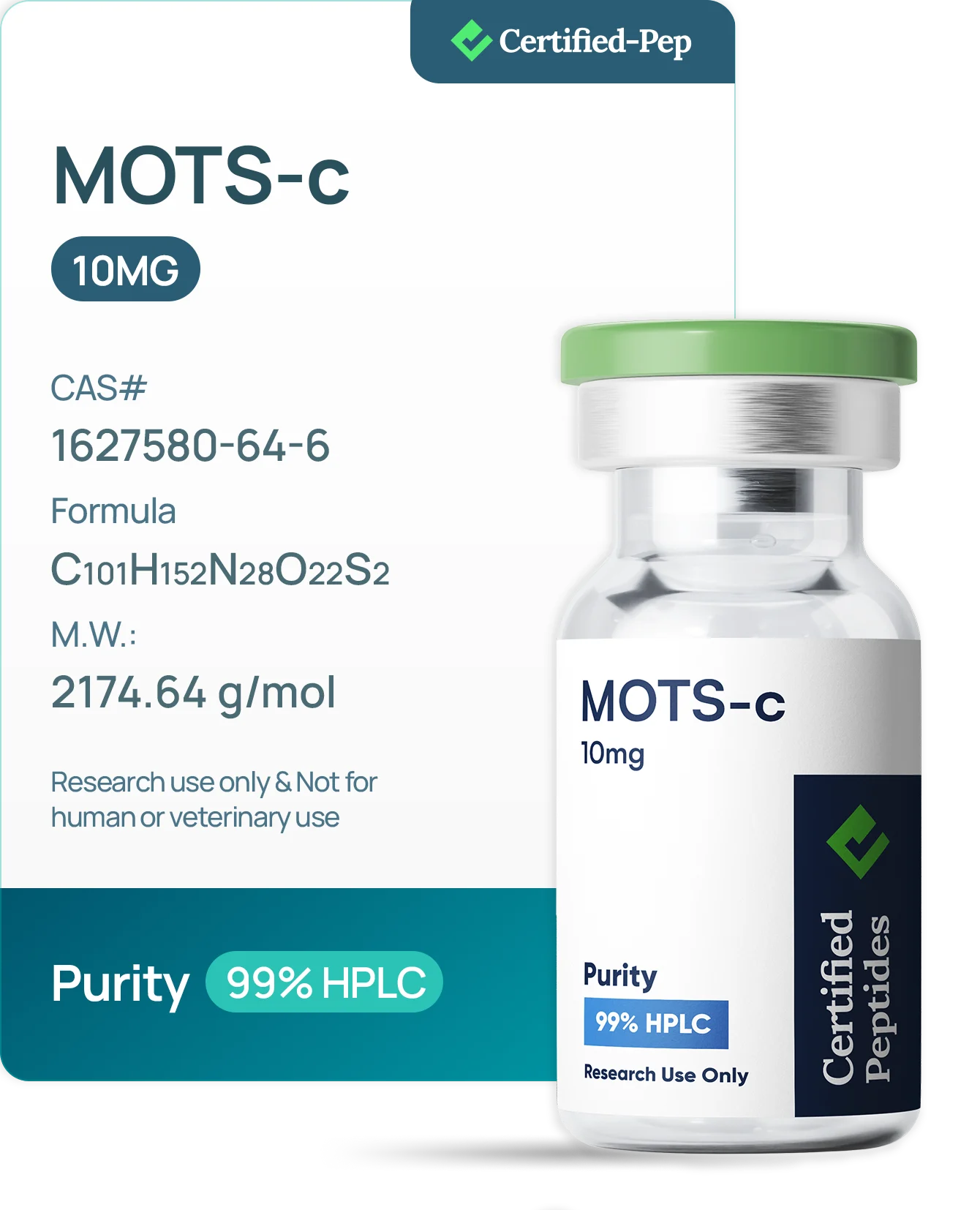
MOTS C 10MG
USD 58.00
In stock
Last synced: 2026-11-01 10:07
Add to retailer cart ↗View product details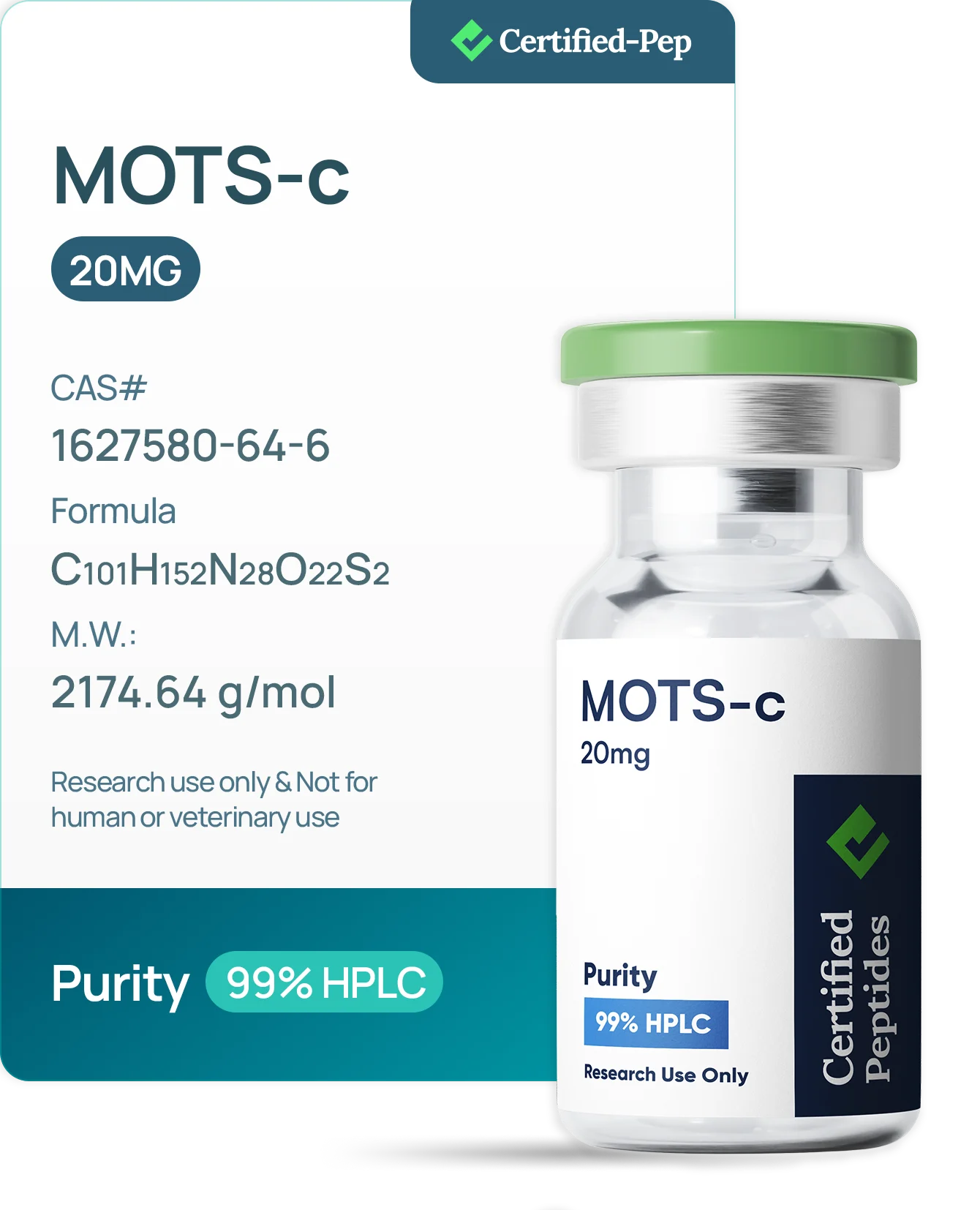
MOTS C 20MG
USD 90.00
In stock
Last synced: 2026-11-01 10:07
Add to retailer cart ↗View product details
MOTS C 40MG
USD 160.00
In stock
Last synced: 2026-11-01 10:07
Add to retailer cart ↗View product details