
Interpreting the Order of Addition in Semax, Copper, and Ascorbate Redox Experiments: A Technical Analysis
The sequence in which Semax, copper ions, and ascorbate are combined in redox experiments critically affects copper redox cycling, reactive oxygen species (ROS) production, and peptide-metal complex formation. This resource analyzes in vitro evidence, mechanistic details, and experimental limitations, providing a technical framework for interpreting such studies.
Introduction: Why Order Matters in Peptide-Metal Redox Experiments
In peptide redox chemistry, the sequence of reagent addition can profoundly influence the outcome of experiments. This is especially true when studying interactions among Semax (a synthetic regulatory peptide), copper ions (Cu(II)), and ascorbate (vitamin C) in the context of redox cycling and reactive oxygen species (ROS) generation. Recent in vitro research has demonstrated that the order in which these components are introduced determines the extent of copper redox cycling, the formation of peptide-metal complexes, and the resultant oxidative stress in model systems Source 1.
This article provides a technical analysis of the mechanistic basis for these order-dependent effects, drawing exclusively on reported findings. It aims to help readers interpret experimental results, understand the terminology and endpoints, and recognize the limitations of current evidence.
Defining the Key Components and Concepts
Semax and Its Metal-Binding Properties
Semax (Met-Glu-His-Phe-Pro-Gly-Pro) is a synthetic peptide with a high affinity for copper(II) ions, primarily due to its ATCUN (Amino Terminal Cu(II) and Ni(II) binding) motif. This motif enables Semax to form highly stable, redox-inert complexes with Cu(II) at physiological pH Source 1.
Copper Redox Cycling and ROS Generation
Copper ions can participate in redox cycling between the Cu(II) and Cu(I) states, especially in the presence of reducing agents like ascorbate. This cycling can catalyze the production of ROS, such as hydroxyl radicals, through Fenton-like reactions. In biological systems, excessive ROS can damage biomolecules and contribute to oxidative stress.
Ascorbate as a Reducing Agent
Ascorbate (vitamin C) is a physiological reductant that can reduce Cu(II) to Cu(I), thereby fueling the redox cycle and promoting ROS generation in the presence of oxygen and suitable copper complexes.
Mechanistic Insights: How Order of Addition Alters Outcomes
Formation of Redox-Inert vs. Redox-Active Complexes
The central mechanistic insight from recent in vitro studies is that the order of addition determines whether copper is sequestered in a redox-inert complex (with Semax) or remains available for redox cycling (with ascorbate or amyloid-β peptide, aβ). When Semax is present before copper is introduced, it rapidly chelates Cu(II), forming a stable, redox-inactive complex that resists reduction by ascorbate. This effectively silences copper-mediated ROS production Source 1.
Conversely, if copper is added to ascorbate first, rapid reduction to Cu(I) occurs before Semax can bind, allowing redox cycling and ROS generation to proceed. If copper is first complexed with aβ, the resulting complex is less redox-active than free copper but still capable of catalyzing ROS production, albeit at a reduced rate.
Kinetic vs. Thermodynamic Control
The observed effects are governed by the interplay between kinetic and thermodynamic factors: - Kinetics: The reduction of Cu(II) by ascorbate is fast, often outpacing the slower formation of the thermodynamically favored Semax:Cu(II) complex. - Thermodynamics: Once formed, the Semax:Cu(II) complex is highly stable and resists both reduction and ligand exchange.
Thus, if Semax is not present at the moment copper encounters ascorbate, a portion of copper is reduced to Cu(I), which cannot be chelated by Semax but may form weaker complexes with other ligands (e.g., aβ or bicinchoninic acid, BCA) Source 1.
Experimental Evidence: In Vitro Findings
Ascorbate Consumption and ROS Production Assays
In controlled in vitro experiments, the rate of ascorbate consumption and the production of hydroxyl radicals (monitored via coumarin-3-carboxylic acid fluorescence) serve as proxies for copper redox cycling and ROS generation. Key findings include: - Semax + Cu(II) before ascorbate: Minimal ascorbate consumption and ROS production, indicating redox silencing. - Cu(II) + ascorbate before Semax: Rapid ascorbate consumption and significant ROS generation, as copper is reduced before Semax can bind. - Cu(II) + aβ before Semax: Intermediate effects, as aβ:Cu(II) complexes are less redox-active than free copper but still catalyze ROS formation.
These results directly demonstrate that the order of addition determines the fate of copper ions and the extent of oxidative chemistry in the system Source 1.
UV-Visible Spectroscopy and Complex Formation
Spectroscopic studies confirm that Semax can extract Cu(II) from preformed aβ:Cu(II) complexes, shifting the absorbance spectrum to that characteristic of the Semax:Cu(II) complex. However, if ascorbate is present and reduction occurs first, some copper is irreversibly converted to Cu(I), which is not efficiently chelated by Semax Source 1.
Practical Reading Checklist for Interpreting Such Studies
- Check the sequence of reagent addition: Was Semax present before copper, or added after copper and ascorbate?
- Identify the endpoints measured: Are the results based on ascorbate consumption, ROS detection, or spectroscopic evidence of complex formation?
- Distinguish kinetic from thermodynamic effects: Does the study discuss how fast reduction or binding events influence the outcome?
- Note the experimental model: Are the findings from cell-free systems, cell cultures, or other models?
- Assess the controls: Were appropriate negative and positive controls included (e.g., copper alone, ascorbate alone, known chelators)?
- Recognize the limitations: Is the system oversimplified compared to biological complexity? Are there competing ligands or redox-active species present?
In-Cell Evidence: Model System Observations
In neuroblastoma SH-SY5Y cell cultures, addition of Cu(II) and ascorbate led to increased intracellular ROS, as measured by dichlorofluorescein diacetate (H2DCFDA) fluorescence. The presence of Semax significantly reduced ROS levels and improved cell viability, but only when Semax was able to chelate copper before extensive redox cycling occurred. These findings are consistent with the in vitro chemical data and reinforce the importance of reagent order in experimental design Source 1.
Mechanistic Limitations and Uncertainties
Model System Constraints
All cited findings are derived from in vitro chemical assays and cultured cell models. These systems lack the full complexity of living organisms, including competing metal-binding proteins, cellular compartmentalization, and dynamic redox environments.
Kinetic Complexity
While the thermodynamic stability of the Semax:Cu(II) complex is well established, the kinetics of complex formation versus reduction by ascorbate are not fully resolved. In real biological systems, additional factors (e.g., protein chaperones, antioxidants) may further modulate these processes.
Ligand Competition
The presence of other strong Cu(I) ligands (such as BCA in experimental setups) can further complicate the outcome, as they may outcompete Semax for reduced copper, altering the redox balance and ROS production Source 1.
Translational Gaps
No direct evidence supports extrapolation of these findings to in vivo systems or clinical contexts. The observed effects are specific to the controlled experimental conditions described.
Reader Questions for Critical Appraisal
- How does the rate of copper reduction by ascorbate compare to the rate of Semax:Cu(II) complex formation?
- Are there other peptides or proteins in the system that could compete with Semax for copper binding?
- What controls were used to distinguish between redox silencing and simple copper sequestration?
- How might the presence of additional reducing agents or chelators alter the observed outcomes?
Key Takeaways and Evidence Summary
- The order in which Semax, copper, and ascorbate are combined in redox experiments critically determines whether copper is sequestered in a redox-inert complex or participates in ROS-generating redox cycling.
- Semax must be present before copper is reduced by ascorbate to achieve maximal redox silencing; otherwise, some copper is irreversibly reduced and escapes chelation.
- These effects are governed by the interplay of kinetic and thermodynamic factors, with rapid reduction outpacing slower complex formation under certain conditions.
- In vitro and cell culture models provide mechanistic insights but do not capture the full complexity of biological systems.
- Experimental interpretation requires careful attention to reagent order, controls, and model limitations.
Evidence Limitations
- All findings are from in vitro and cell culture models; no in vivo or clinical data are available.
- The kinetic parameters of copper reduction and Semax binding are not fully characterized.
- The presence of additional ligands or redox-active species in biological systems may alter outcomes.
- No evidence supports safety, efficacy, or therapeutic use in humans or animals.
For research and educational purposes only. Not medical advice. Research products are not for human or veterinary use.
Sources
- Semax, a Copper Chelator Peptide, Decreases the Cu(II)-Catalyzed ROS Production and Cytotoxicity of aβ by Metal Ion Stripping and Redox Silencing. https://pmc.ncbi.nlm.nih.gov/articles/PMC12151629/
Continue exploring
- Why Patient Population and Background Treatment Matter in Thymosin Alpha-1 Research
- What an 84-Gene qPCR Panel Reveals About Selank and Neurotransmission: Evidence and Limitations
- Understanding Specificity, Precision, and Recovery in TB-500 Equine Analytical Method Validation: A Research-Focused Review
TRACE THE EVIDENCE
Sources & further reading
RELATED PRODUCT INFORMATION
From the Certified Pep catalog.
Product references are informational, not a recommendation for human use. Prices and availability must be verified at retailer checkout.
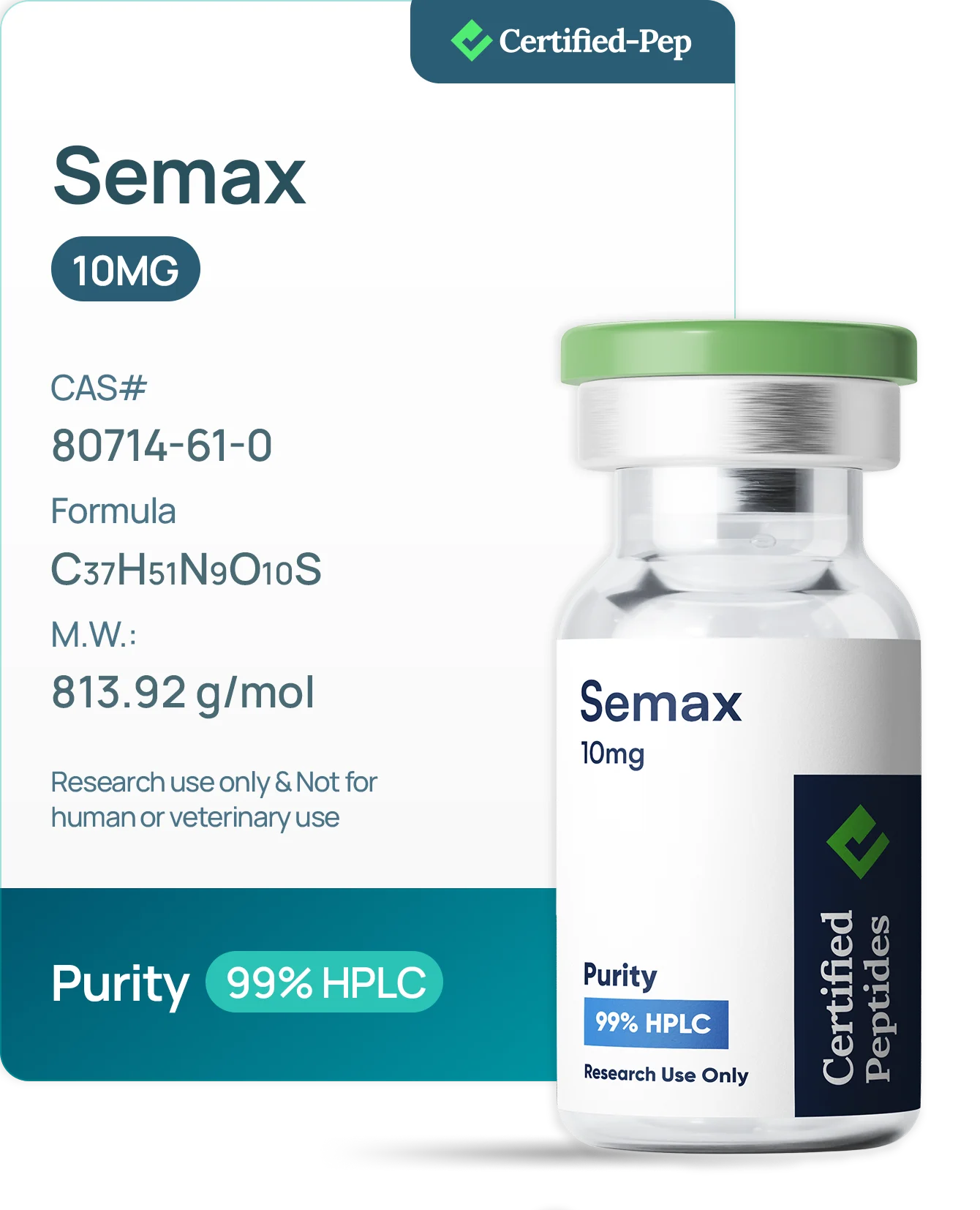
SEMAX 10MG
USD 54.00
In stock
Last synced: 2026-11-01 10:07
Add to retailer cart ↗View product details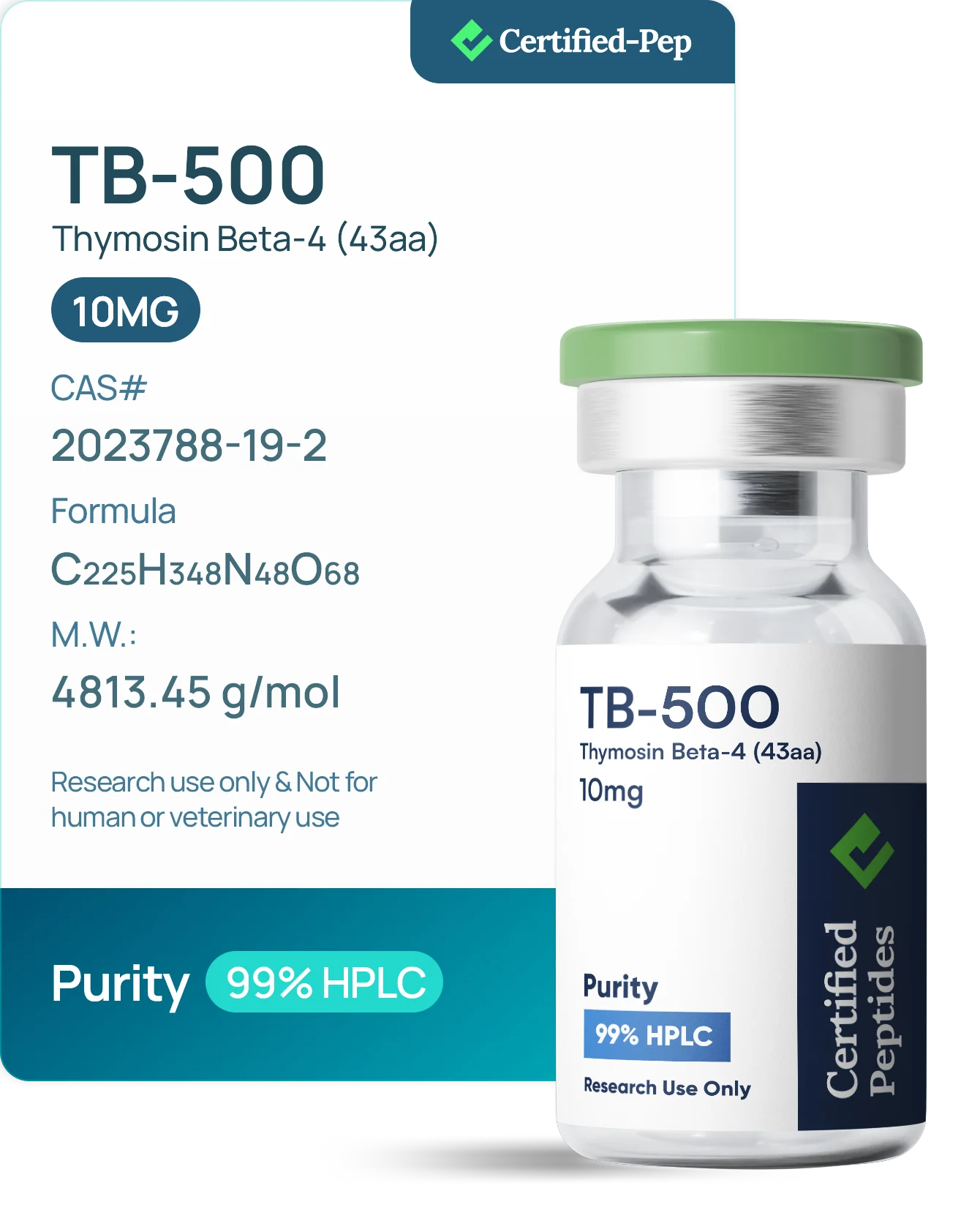
TB-500 10 MG
USD 70.00
In stock
Last synced: 2026-11-01 10:07
Add to retailer cart ↗View product details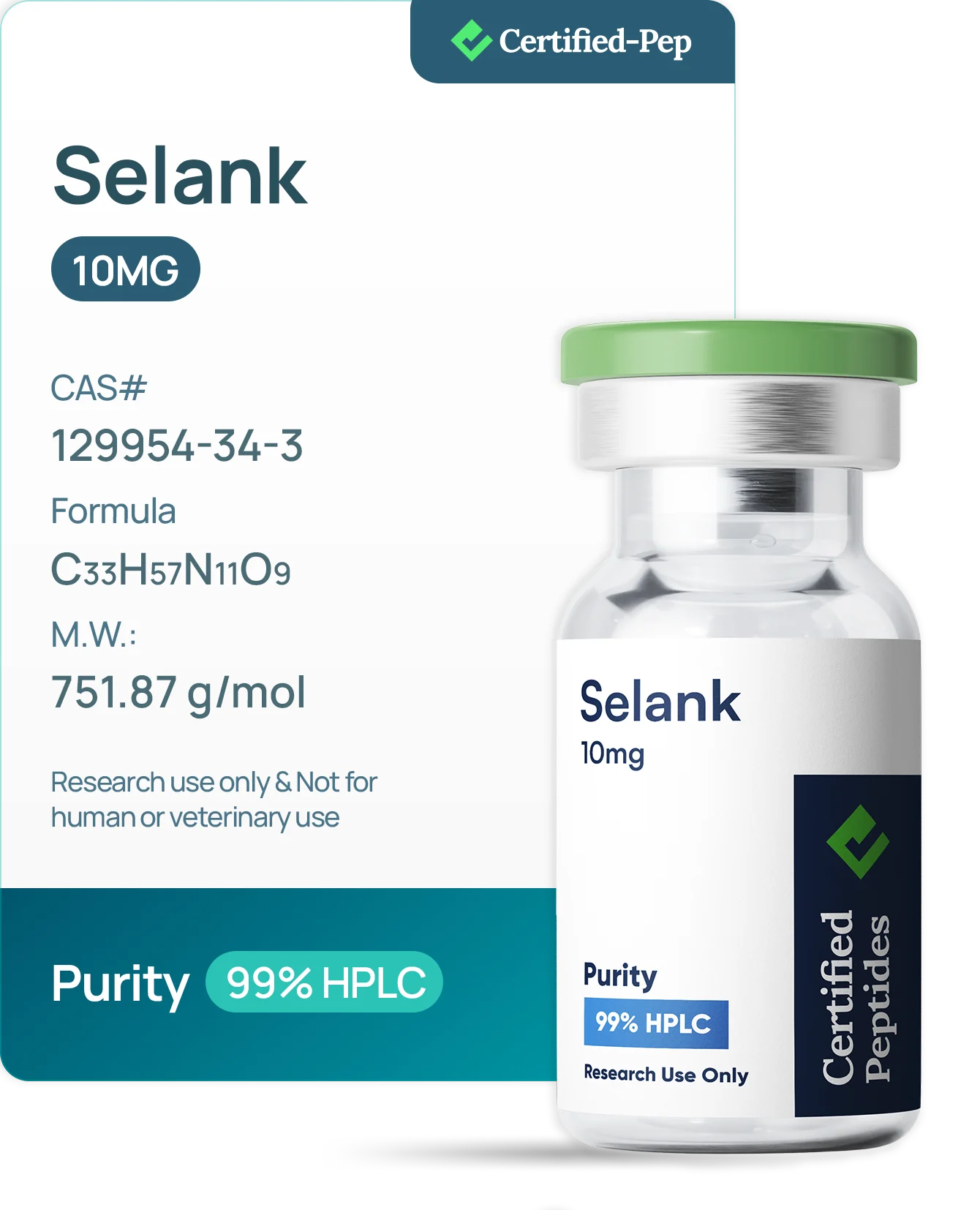
SELANK 10 MG
USD 50.00
In stock
Last synced: 2026-11-01 10:07
Add to retailer cart ↗View product details
THYMOSIN ALPHA-1 10MG
USD 78.00
In stock
Last synced: 2026-11-01 10:07
Add to retailer cart ↗View product details