
How to Read Peptide Research: Evidence and Limitations
Learn to assess peptide studies: controls, cell and animal models, measured outcomes and gene-expression findings, with a qualified GHK-Cu example.

Direct Answer: Interpreting Peptide Research Evidence
Interpreting peptide research requires a critical understanding of experimental design, including the use of controls, the choice of study models (cell, animal, or human), and the nature of measured outcomes. Findings from cell cultures, animal studies, and gene-expression analyses provide valuable mechanistic insights but do not constitute proof of human benefit or clinical efficacy. GHK-Cu (glycyl-L-histidyl-L-lysine copper complex) serves as a clear example: while it demonstrates promising effects in vitro and in animal models, these results cannot be directly extrapolated to humans without rigorous, controlled clinical trials. Researchers and readers must distinguish between hypothesis-generating data and evidence of real-world therapeutic value.
Understanding Experimental Controls
Experimental controls are essential for distinguishing the true effects of a peptide from background noise, placebo effects, or unrelated variables. In peptide research, controls may include: - Negative controls (e.g., saline or vehicle only) to show what happens without the peptide. - Positive controls (e.g., a known active compound) to confirm the system responds as expected. - Peptide analogs or scrambled sequences to test specificity.
For example, in a rat wound healing study of GHK-Cu, researchers compared the effects of GHK-Cu injections to saline (negative control) and to a control tripeptide with a different sequence, which had no significant effect. This design helps ensure that observed outcomes are due to GHK-Cu specifically, not to injection trauma or generic peptide effects Source 1.
Key questions for readers: - Was there a control group, and what type? - Were the controls appropriate for the hypothesis? - Did the study include blinding or randomization to reduce bias?
Why it matters: Without proper controls, it is impossible to attribute observed effects to the peptide itself, undermining the validity of the findings.
Study Models: From Cells to Animals to Humans
Peptide research progresses through a hierarchy of experimental models: - In vitro (cell culture): Allows detailed mechanistic studies but lacks the complexity of whole organisms. - Ex vivo (tissue explants): Maintains some tissue architecture but is still outside the living organism. - In vivo (animal models): Captures systemic effects, metabolism, and interactions but may not translate to humans. - Human studies: The gold standard for clinical relevance, but often limited by ethical, logistical, and financial constraints.
In the case of GHK-Cu, research spans from cell cultures (e.g., fibroblasts, neurons) to animal models (e.g., rats, mice, pigs). For instance, GHK-Cu increased extracellular matrix accumulation and collagen synthesis in rat wound chambers, but these findings are specific to the rat model and experimental conditions Source 1.
Key questions for readers: - What model system was used? - How closely does it mimic human biology or disease? - Are there known species differences in peptide metabolism or receptor expression?
Why it matters: Results in one model may not predict outcomes in another, especially when moving from animals to humans.
Measured Outcomes: What Is Actually Assessed?
The measured outcomes (endpoints) in peptide studies can vary widely, including: - Molecular markers: Gene expression, protein levels, signaling pathway activation. - Cellular responses: Proliferation, migration, differentiation, apoptosis. - Tissue changes: Histology, collagen content, wound closure. - Functional outcomes: Behavioral changes, physiological measurements.
For GHK-Cu, measured outcomes have included increases in collagen and glycosaminoglycan content, changes in specific mRNA levels, and gene expression profiles in cell lines and animal tissues Source 1; Source 2.
Key questions for readers: - Are the outcomes direct measures of health or disease, or are they surrogate markers? - Are the endpoints validated and relevant to the research question? - How were the outcomes measured (e.g., quantitative, blinded, reproducible)?
Why it matters: Surrogate or mechanistic endpoints may not reflect meaningful clinical benefit.
Why Preclinical Findings Are Not Proof of Human Benefit
Cell, animal, and gene-expression studies are hypothesis-generating, not definitive. Several factors limit their direct applicability to humans: - Species differences: Metabolism, immune response, and receptor expression can differ markedly between animals and humans. - Dose and exposure: Concentrations used in vitro may not be achievable or safe in humans. - Complexity: Human diseases involve multifactorial processes not fully replicated in simplified models. - Gene expression ≠ clinical effect: Changes in gene expression do not guarantee functional or therapeutic outcomes.
For example, GHK-Cu upregulates genes associated with tissue repair and neuroprotection in cell lines and animal models, but this does not establish safety or efficacy in humans Source 2.
Key questions for readers: - Has the peptide been tested in humans under controlled conditions? - Are there data on safety, pharmacokinetics, or long-term effects? - Do the preclinical findings justify further clinical investigation?
Why it matters: Many interventions that show promise in preclinical studies fail in human trials due to unforeseen toxicity, lack of efficacy, or other factors.
GHK-Cu as a Case Study: Research Context and Findings
GHK-Cu (glycyl-L-histidyl-L-lysine copper complex) is a naturally occurring peptide with high affinity for copper ions. It has been studied for its potential roles in tissue repair, anti-oxidation, and gene regulation.
In vitro and Animal Studies
- Cell culture: GHK-Cu stimulates collagen synthesis in fibroblasts and promotes neuronal outgrowth in embryonic neurons Source 2.
- Animal models: In rats, GHK-Cu increased wound chamber content (collagen, DNA, protein) and upregulated type I and III collagen mRNAs. A control tripeptide had no effect, supporting specificity Source 1.
- Gene expression: GHK-Cu modulates hundreds of genes in human cell lines, including those involved in antioxidant defense, DNA repair, and neural function Source 2.
Limitations
- No controlled human trials: There is no direct evidence for clinical efficacy or safety in humans.
- Gene expression is not outcome: While GHK-Cu alters gene expression, the functional consequences in living humans remain unproven.
- Animal models are not predictive: Effects in rats or mice may not translate to human biology.
Incidental research-only product mention: GHK-Cu is available as a research peptide (e.g., GHKCU 100 MG), but these products are not for human or veterinary use and are intended solely for laboratory investigation.
Interpreting Gene Expression Data
Gene expression profiling is a powerful tool for understanding how peptides like GHK-Cu influence cellular pathways. However, several caveats apply: - Magnitude vs. significance: Large fold-changes in gene expression do not always translate to biological relevance. - Cell-type specificity: Effects may differ across cell types and contexts. - Functional validation needed: Changes in mRNA must be linked to protein function and physiological outcomes.
For GHK, gene expression analyses using the Broad Institute Connectivity Map identified modulation of genes related to tissue repair, antioxidant defense, and neural health Source 2. However, the authors caution that gene expression data are not always predictive of biological action, and discrepancies can occur between in vitro and in vivo findings.
Key questions for readers: - Were gene expression changes validated at the protein or functional level? - Are the observed changes consistent across models? - Do the gene targets have established roles in the relevant biological processes?
Why it matters: Overinterpretation of gene expression data can lead to unsupported claims about therapeutic potential.
A Practical Checklist for Reading Peptide Research
- Identify the study model: Is it cell, animal, or human?
- Check for appropriate controls: Are there negative and positive controls?
- Assess measured outcomes: Are endpoints direct or surrogate? Are they validated?
- Evaluate statistical analysis: Are results statistically significant and biologically meaningful?
- Look for replication: Are findings consistent across studies and models?
- Distinguish mechanism from efficacy: Does the study show a mechanism or a real-world effect?
- Check for conflicts of interest and funding sources.
- Be cautious with gene expression and preclinical data: Do not infer human benefit without clinical evidence.
Reader questions to consider: - What is the strength of evidence for the claimed effect? - Are there gaps or uncertainties in the data? - What further research is needed to establish clinical relevance?
Limitations, Uncertainty, and Key Takeaways
Limitations
- Lack of human data: The GHK/GHK-Cu sources discussed here are mainly preclinical; this should not be generalized to all peptide medicines.
- Model-specific findings: Results may not generalize across species or experimental systems.
- Gene expression ≠ clinical outcome: Functional validation is essential.
- Potential for bias: Funding sources and conflicts of interest can influence interpretation.
Uncertainty
- Translational gaps: Many peptides with promising preclinical profiles fail in human trials.
- Safety and dosing unknowns: Without human studies, safety, pharmacokinetics, and optimal dosing remain speculative.
Key Takeaways
- Interpret peptide research with caution: Preclinical data are valuable for hypothesis generation but not for clinical guidance.
- Controls and models matter: The strength of evidence depends on rigorous experimental design.
- GHK-Cu illustrates both promise and limits: While mechanistically interesting, its effects in humans are unproven.
- Research products are not for human or veterinary use: Laboratory peptides are for research only and should not be used outside controlled experimental settings.
Sources
- In vivo stimulation of connective tissue accumulation by the tripeptide-copper complex glycyl-L-histidyl-L-lysine-Cu2+ in rat experimental wounds - https://pmc.ncbi.nlm.nih.gov/articles/PMC288419/
- The Effect of the Human Peptide GHK on Gene Expression Relevant to Nervous System Function and Cognitive Decline - https://pmc.ncbi.nlm.nih.gov/articles/PMC5332963/
For research and educational purposes only. Not medical advice. Research products are not for human or veterinary use.
Continue exploring
- What are peptides, and how are they different from proteins?
- What can rat wound studies tell us—and not tell us—about GHK-Cu and connective tissue?
- GHK vs. GHK-Cu: What Is the Difference?
Apply the checklist to other compounds
These separate evidence reviews illustrate why compound identity, study design and measured outcomes matter:
TRACE THE EVIDENCE
Sources & further reading
RELATED PRODUCT INFORMATION
From the Certified Pep catalog.
Product references are informational, not a recommendation for human use. Prices and availability must be verified at retailer checkout.
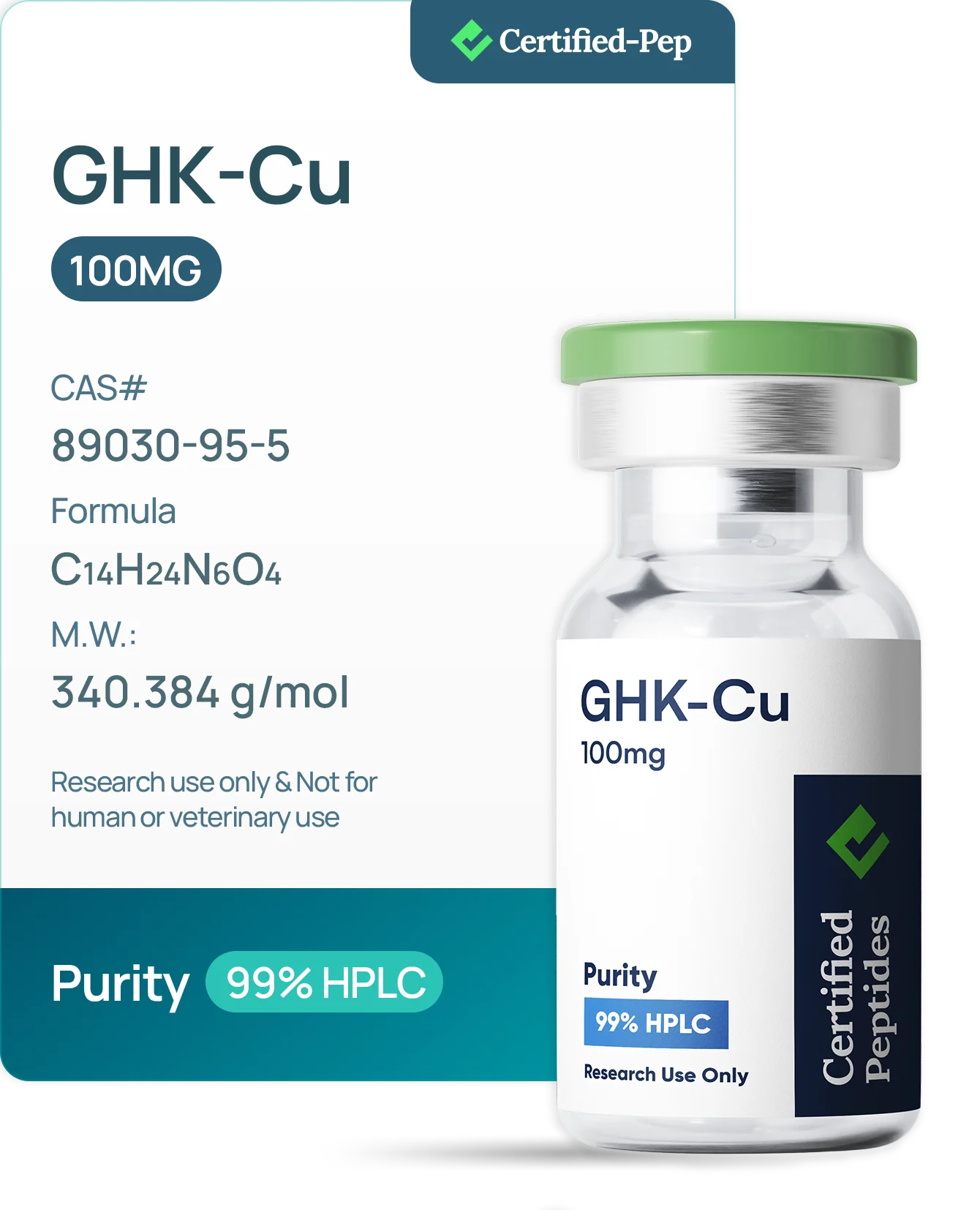
GHKCU 100 MG
USD 59.00
In stock
Last synced: 2026-09-17 09:48
Add to retailer cart ↗View product details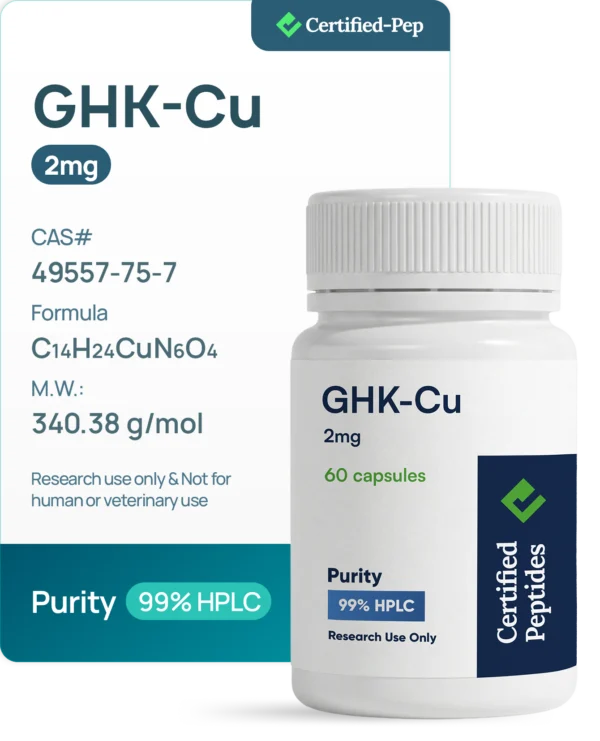
GHKCU 2MG 60 CAPSULES
USD 198.00
Out of stock
Last synced: 2026-09-17 09:48
View product ↗