
What can rat wound studies tell us—and not tell us—about GHK-Cu and connective tissue?
Rat wound studies show that GHK-Cu (glycyl-L-histidyl-L-lysine-copper) can stimulate connective tissue accumulation, including collagen and glycosaminoglycans, in vivo. However, these findings are limited to animal models and cannot be directly translated to human outcomes or clinical recommendations. The mechanisms and potential applications in humans remain uncertain and require further research.
Direct Answer: What do rat wound studies reveal about GHK-Cu and connective tissue?
Rat wound studies indicate that GHK-Cu (glycyl-L-histidyl-L-lysine-copper) can stimulate the accumulation of connective tissue components, such as collagen and glycosaminoglycans, in vivo. These findings suggest a potential role for GHK-Cu in modulating extracellular matrix production during wound healing in rats. However, these results are specific to animal models and do not provide direct evidence for effects in humans or clinical applications. Further research is needed to determine whether these findings are relevant to human biology or therapeutic use Source 1.
What is GHK-Cu and why is it studied in wound healing?
GHK-Cu is a tripeptide (glycyl-L-histidyl-L-lysine) complexed with copper ions. It was first identified as a growth factor for differentiated cells and has since been studied for its potential to influence tissue repair and regeneration. Researchers are interested in GHK-Cu because it appears to modulate processes involved in wound healing, particularly the synthesis and accumulation of extracellular matrix (ECM) components like collagen, elastin, and glycosaminoglycans. These molecules are crucial for the structural integrity and function of connective tissue.
The rationale for studying GHK-Cu in wound healing stems from in vitro findings that it can stimulate fibroblast activity and ECM production. Animal models, such as rats, provide a controlled environment to investigate these effects in living tissue, offering insights into the peptide's biological activity and potential mechanisms Source 1.
How were the effects of GHK-Cu on connective tissue measured in rat studies?
In the referenced rat study, researchers used a wound chamber model: stainless steel wire mesh cylinders were implanted subcutaneously on the backs of rats. GHK-Cu was injected into these wound chambers at various concentrations, while control groups received saline. After a set period, the wound chambers were collected and analyzed for several markers of connective tissue accumulation:
- Dry weight: An indicator of total tissue accumulation.
- Total protein: Reflects overall protein synthesis in the wound.
- Collagen content: Measured to assess the primary structural protein of connective tissue.
- DNA content: Indicates cellular proliferation.
- Elastin and glycosaminoglycans: Other ECM components important for tissue elasticity and hydration.
- Specific mRNAs: Levels of type I and III collagen mRNAs were measured to evaluate gene expression related to collagen synthesis.
The study found that GHK-Cu produced a concentration-dependent increase in dry weight, DNA, total protein, collagen, and glycosaminoglycan content within the wound chambers. Notably, collagen synthesis was stimulated to a greater extent than non-collagen proteins, and both type I and III collagen mRNA levels were elevated Source 1.
What mechanisms are proposed for GHK-Cu’s effects on connective tissue in rats?
The observed effects of GHK-Cu on connective tissue accumulation in rats are thought to be mediated by several mechanisms:
- Stimulation of fibroblast activity: Fibroblasts are the primary cells responsible for producing collagen and other ECM components. GHK-Cu may enhance their proliferation and biosynthetic activity.
- Upregulation of collagen gene expression: Increased mRNA levels for type I and III collagen suggest that GHK-Cu can promote the transcription of genes involved in collagen synthesis.
- Modulation of glycosaminoglycan synthesis: The study found an increase in glycosaminoglycans, particularly dermatan sulfate, which is important for ECM structure and function.
- No significant effect on TGF-beta mRNA: Transforming growth factor-beta (TGF-beta) is a key regulator of wound healing, but GHK-Cu did not appear to increase its mRNA levels in this model, suggesting its effects may be independent of this pathway.
These mechanisms are based on molecular and biochemical analyses of rat wound tissue and provide a framework for understanding how GHK-Cu might influence connective tissue dynamics in vivo Source 1.
What are the limitations of rat wound studies for understanding GHK-Cu’s role in connective tissue?
While rat wound studies offer valuable insights, they have important limitations:
- Species differences: Rats and humans differ in skin structure, wound healing processes, and immune responses. Results in rats may not predict outcomes in humans.
- Controlled environment: The wound chamber model isolates the wound from normal physiological influences, which may not reflect real-world healing scenarios.
- Short-term observation: Most animal studies focus on early phases of wound healing and may not capture long-term effects or potential adverse outcomes.
- Lack of functional outcomes: While biochemical markers of ECM accumulation are measured, these do not necessarily translate to improved wound strength, appearance, or function.
- No clinical endpoints: The studies do not assess pain, infection rates, or other clinically relevant outcomes.
Therefore, while rat studies can demonstrate biological activity and suggest mechanisms, they cannot establish safety, efficacy, or therapeutic value in humans Source 1.
What can’t rat wound studies tell us about GHK-Cu and human connective tissue?
Rat wound studies cannot provide direct evidence for the safety, efficacy, or clinical utility of GHK-Cu in humans. Specifically, they do not address:
- Human dosing or administration: Animal studies use different dosing regimens and routes of administration, which may not be applicable to humans.
- Long-term safety: Potential adverse effects, toxicity, or unintended consequences in humans are not assessed.
- Regulatory approval: Animal data alone are insufficient for regulatory agencies to approve GHK-Cu for medical use.
- Efficacy in human disease or injury: The complexity of human wounds, underlying health conditions, and variability in healing are not replicated in animal models.
Translation from animal to human research requires carefully designed clinical trials to determine whether the observed effects are relevant and beneficial in people Source 1.
What are the next steps for GHK-Cu research beyond animal models?
To advance understanding of GHK-Cu’s potential in connective tissue repair, researchers would need to:
- Conduct controlled human studies: These would assess safety, optimal dosing, and efficacy in relevant clinical populations.
- Investigate mechanisms in human cells: In vitro studies using human fibroblasts and other cell types can clarify molecular pathways.
- Evaluate long-term outcomes: Both animal and human studies should assess not only biochemical markers but also functional and cosmetic outcomes.
- Monitor for adverse effects: Comprehensive safety assessments are essential before considering clinical applications.
Such research would help determine whether the promising findings in rats are applicable to human medicine and whether GHK-Cu could play a role in wound care or connective tissue disorders Source 1.
FAQ: What else do rat studies suggest about GHK-Cu and connective tissue?
Q: Does GHK-Cu affect only collagen, or other ECM components as well? A: Rat studies show that GHK-Cu increases not only collagen but also glycosaminoglycans and elastin, suggesting a broader effect on the extracellular matrix Source 1.
Q: Is the effect of GHK-Cu specific, or could it be due to any tripeptide? A: The study used a control tripeptide (L-glutamyl-L-histidyl-L-proline), which had no significant effect, indicating that the observed activity is specific to GHK-Cu Source 1.
Evidence limitations and key takeaways
- Animal model constraints: Findings are limited to rats and may not predict human responses.
- Mechanistic insights: GHK-Cu appears to stimulate ECM accumulation via increased collagen and glycosaminoglycan synthesis, but the precise pathways in humans are unknown.
- No clinical guidance: These studies do not support any recommendations for human use, dosing, or safety.
- Research gap: Human studies are needed to confirm relevance and potential applications.
Key takeaway: Rat wound studies provide evidence that GHK-Cu can stimulate connective tissue accumulation in vivo, but these results are preliminary and not directly applicable to human health or clinical practice. Further research is required to determine its significance for human wound healing or connective tissue disorders.
For research and educational purposes only. Not medical advice. Research products are not for human or veterinary use.
Sources
- In vivo stimulation of connective tissue accumulation by the tripeptide-copper complex glycyl-L-histidyl-L-lysine-Cu2+ in rat experimental wounds - PMC. https://pmc.ncbi.nlm.nih.gov/articles/PMC288419/
Related reading
For more context, read How to Read Peptide Research: Evidence and Limitations.
TRACE THE EVIDENCE
Sources & further reading
RELATED PRODUCT INFORMATION
From the Certified Pep catalog.
Product references are informational, not a recommendation for human use. Prices and availability must be verified at retailer checkout.
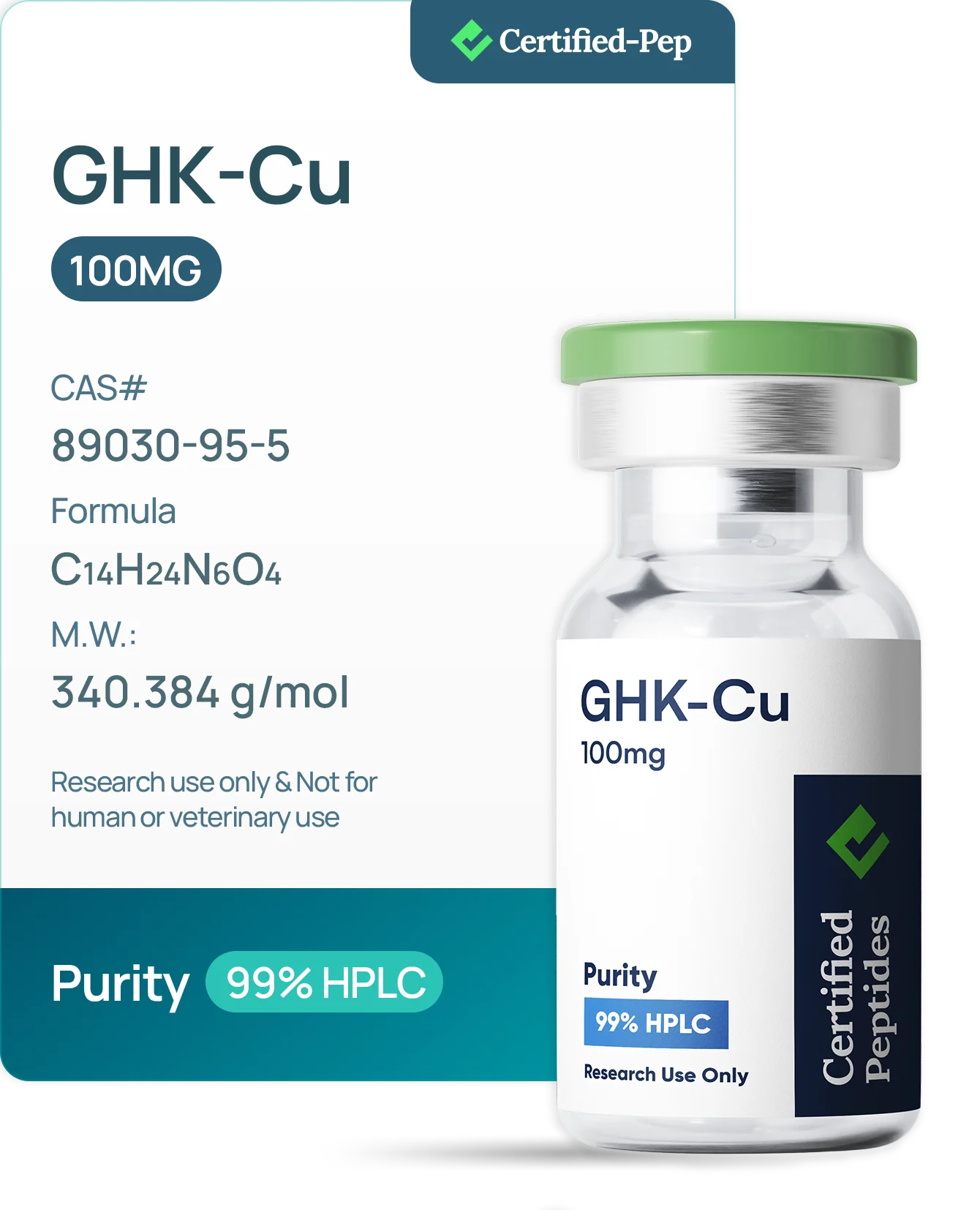
GHKCU 100 MG
USD 59.00
In stock
Last synced: 2026-09-17 09:48
Add to retailer cart ↗View product details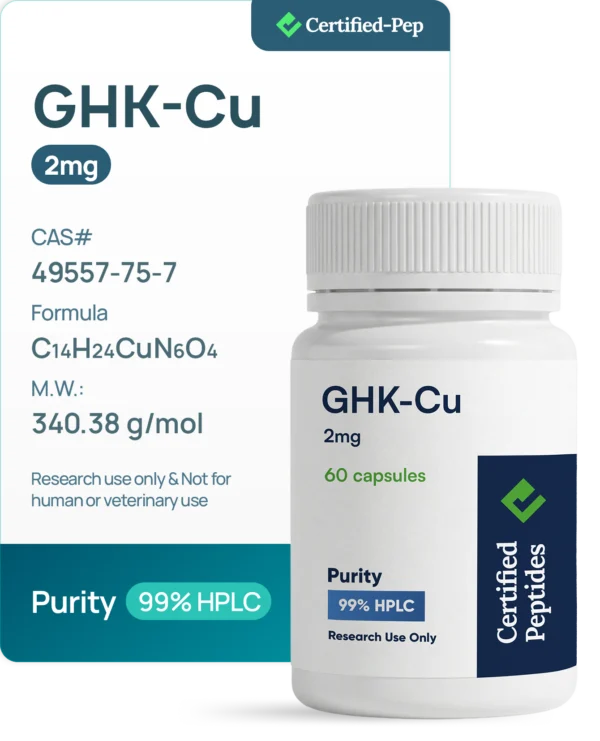
GHKCU 2MG 60 CAPSULES
USD 198.00
Out of stock
Last synced: 2026-09-17 09:48
View product ↗