
What Does Peptide Half-Life Mean?
Understand peptide half-life, degradation and elimination, how these differ from biological effect duration, and how to interpret study limitations.

Direct Answer: What Does Peptide Half-Life Mean?
Peptide half-life refers to the time required for the concentration of a peptide in a biological system to decrease by half, primarily due to processes such as enzymatic degradation and elimination from the body. This pharmacokinetic parameter is distinct from both the chemical stability of a peptide (its resistance to breakdown in various environments) and the duration of its biological effect (how long it exerts a measurable action in a biological system). Understanding peptide half-life is crucial for interpreting research on peptide pharmacology, as it influences dosing intervals, potential efficacy, and the design of peptide analogues for improved therapeutic performance. However, half-life alone does not predict the duration of biological effects, which may persist beyond the presence of the peptide due to downstream signaling or cellular changes. All interpretations must be grounded in controlled research, and preclinical findings should not be extrapolated to clinical use without further evidence.
For research and educational purposes only. Not medical advice. Research products are not for human or veterinary use.
Section 1: Defining Peptide Half-Life in Research Context
What Is Peptide Half-Life?
In pharmacological and biochemical research, the half-life of a peptide is defined as the time it takes for its concentration to be reduced by 50% in a given biological compartment (e.g., plasma, tissue, or cell culture medium). This metric is typically determined by measuring peptide levels at various time points after administration or exposure, using techniques such as mass spectrometry or immunoassays. The half-life is a key parameter in pharmacokinetics—the study of how substances are absorbed, distributed, metabolized, and eliminated by biological systems.
Peptide half-life is influenced by several factors, including peptide sequence, structure, susceptibility to enzymatic degradation, and the presence of protective modifications (e.g., cyclization, PEGylation). In research, half-life measurements are used to compare the stability of different peptide analogues, to optimize drug candidates, and to predict how long a peptide might remain active in vivo or in vitro. However, it is important to note that half-life values can vary significantly between species, experimental models, and even between different tissues within the same organism Source 1.
Section 2: Mechanisms of Peptide Degradation
Enzymatic and Chemical Breakdown
Peptide degradation refers to the breakdown of peptide molecules into smaller fragments or amino acids, primarily through enzymatic hydrolysis. In biological systems, proteases (enzymes that cleave peptide bonds) are the main agents of peptide degradation. These enzymes are abundant in blood, tissues, and cellular compartments, and their activity can dramatically shorten the half-life of unmodified peptides.
Chemical instability can also contribute to degradation, especially in harsh environments (e.g., acidic or basic conditions, oxidative stress). For example, peptides lacking secondary or tertiary structure are more susceptible to hydrolysis and denaturation Source 1. Researchers often use chemical modifications—such as cyclization, incorporation of D-amino acids, or attachment of bulky groups—to enhance peptide stability and resist enzymatic attack. The rate of degradation is a major determinant of peptide half-life and is a critical consideration in the design of peptide-based research tools and therapeutics.
Section 3: Elimination Pathways of Peptides
Clearance from Biological Systems
Elimination refers to the removal of peptide molecules from a biological system, typically through renal (kidney) filtration, hepatic (liver) metabolism, or uptake and degradation by cells. For most small to medium-sized peptides, renal clearance is the dominant elimination pathway, as peptides below a certain molecular weight are rapidly filtered from the bloodstream and excreted in urine.
Larger peptides or those with specific modifications (e.g., PEGylation) may be cleared more slowly, as these changes can increase molecular size and reduce renal filtration. Hepatic metabolism can also contribute, especially for peptides that are substrates for liver enzymes. The combined effects of degradation and elimination determine the overall half-life of a peptide in vivo. In research, understanding these pathways is essential for interpreting pharmacokinetic data and for designing peptides with desired persistence in biological systems Source 1.
Section 4: Distinguishing Stability from Duration of Biological Effect
Stability vs. Biological Activity Duration
Peptide stability refers to the resistance of a peptide to degradation and elimination, often quantified by its half-life. However, the duration of a peptide’s biological effect—the period during which it exerts a measurable action (e.g., receptor activation, enzyme inhibition)—may not directly correspond to its half-life.
Several factors can cause the biological effect to outlast the presence of the peptide itself. For example, some peptides trigger signaling cascades or induce gene expression changes that persist after the peptide has been cleared. Conversely, a peptide may be present in the system but rendered inactive due to receptor desensitization or antagonism. Therefore, while stability is necessary for sustained biological action, it is not sufficient to predict effect duration. Researchers must measure both pharmacokinetic (half-life) and pharmacodynamic (effect duration) endpoints to fully characterize a peptide’s profile Source 1.
Section 5: Experimental Models for Measuring Peptide Half-Life
In Vitro, Animal, and Human Studies
Peptide half-life can be measured in various experimental systems, each with distinct advantages and limitations. In vitro studies (e.g., in plasma or cell culture) allow for controlled assessment of degradation kinetics and the impact of specific enzymes or conditions. However, these models may not fully replicate the complexity of living organisms.
Animal studies provide more physiologically relevant data, capturing the interplay of degradation, distribution, and elimination pathways. However, interspecies differences in enzyme expression and organ function can limit the direct translation of animal half-life data to humans. Controlled human studies, when available, offer the most relevant data for clinical translation, but are typically limited to advanced research stages and approved compounds. Researchers must carefully interpret half-life data in the context of the experimental model used, and avoid overgeneralizing findings across systems Source 1.
Section 6: Strategies to Enhance Peptide Stability and Half-Life
Chemical and Structural Modifications
To address the inherent instability of many peptides, researchers have developed a range of chemical and structural modifications aimed at prolonging half-life. Common strategies include:
- Cyclization: Linking the ends or side chains of a peptide to form a cyclic structure, which can reduce susceptibility to proteases.
- Incorporation of D-amino acids: Substituting L-amino acids with their D-enantiomers at key positions to resist enzymatic cleavage.
- PEGylation: Attaching polyethylene glycol (PEG) chains to increase molecular size and reduce renal clearance.
- Lipidation: Adding fatty acid chains to enhance binding to serum proteins and reduce elimination.
These modifications can significantly extend peptide half-life, but may also alter biological activity, receptor selectivity, or immunogenicity. Each approach must be empirically tested to balance stability with desired pharmacological properties Source 1.
Section 7: Interpreting Peptide Half-Life Data in Research
Practical Considerations and Common Pitfalls
When reading peptide research, it is important to critically assess how half-life was measured and reported. Key questions include:
- Was the half-life determined in vitro, in animals, or in humans?
- What biological matrix (e.g., plasma, tissue) was used?
- Were degradation and elimination pathways characterized?
- Were chemical modifications present that could affect stability?
- How does the half-life relate to the observed duration of biological effect?
Researchers should also be cautious about extrapolating half-life data from one system to another, and about assuming that longer half-life always translates to improved efficacy or safety. The context of the experimental model, the endpoints measured, and the limitations of the study design all influence the interpretation of half-life data Source 1.
Section 8: Limitations, Uncertainties, and Research Gaps
Current Challenges in Peptide Half-Life Research
Despite advances in peptide engineering and analytical methods, significant challenges remain in accurately predicting and optimizing peptide half-life. Limitations include:
- Species differences: Enzyme expression and elimination pathways can vary widely between animal models and humans.
- Complex biological environments: In vivo systems present multiple, overlapping degradation and elimination mechanisms that are difficult to replicate in vitro.
- Unpredictable modifications: Chemical modifications may have unintended effects on immunogenicity, distribution, or receptor interactions.
- Incomplete pharmacodynamic data: The relationship between peptide presence and biological effect is often complex and not fully understood.
Further research is needed to develop more predictive models, to better understand the interplay between stability and biological activity, and to design peptides with optimized profiles for specific research or therapeutic applications Source 1.
Practical Reading Checklist: Interpreting Peptide Half-Life Research
- Identify the experimental model: Is the half-life measured in vitro, in animals, or in humans?
- Assess the measurement method: What analytical techniques were used to quantify peptide levels?
- Examine peptide modifications: Are there chemical or structural changes that affect stability?
- Distinguish between stability and effect duration: Does the study report both pharmacokinetic and pharmacodynamic endpoints?
- Consider elimination pathways: Are renal, hepatic, or other clearance mechanisms discussed?
- Evaluate limitations: Does the study acknowledge species differences, model constraints, or other uncertainties?
- Avoid overgeneralization: Do not infer clinical efficacy or safety from preclinical half-life data alone.
Key Takeaways
- Peptide half-life is a pharmacokinetic parameter reflecting the time for 50% reduction in peptide concentration due to degradation and elimination.
- Chemical stability, measured half-life and duration of biological effect are related but distinct; biological effects may persist beyond peptide presence.
- Multiple experimental models are used to measure half-life, each with specific limitations.
- Chemical modifications can enhance peptide stability but may alter other properties.
- Critical interpretation of half-life data requires attention to experimental context, measurement methods, and study limitations.
Evidence Limitations
This article is based on a comprehensive review of peptide research and development, with a focus on pharmacokinetic and pharmacodynamic principles. Most findings are derived from preclinical studies and controlled research settings. Direct extrapolation to clinical outcomes or safety is not supported without further evidence. The complexity of biological systems and interspecies differences limit the predictive power of in vitro and animal data for human applications. Ongoing research is needed to refine models and optimize peptide design for specific research goals.
For research and educational purposes only. Not medical advice. Research products are not for human or veterinary use.
Sources
- Therapeutic peptides: current applications and future directions. https://pmc.ncbi.nlm.nih.gov/articles/PMC8844085/
Continue exploring
TRACE THE EVIDENCE
Sources & further reading
RELATED PRODUCT INFORMATION
From the Certified Pep catalog.
Product references are informational, not a recommendation for human use. Prices and availability must be verified at retailer checkout.
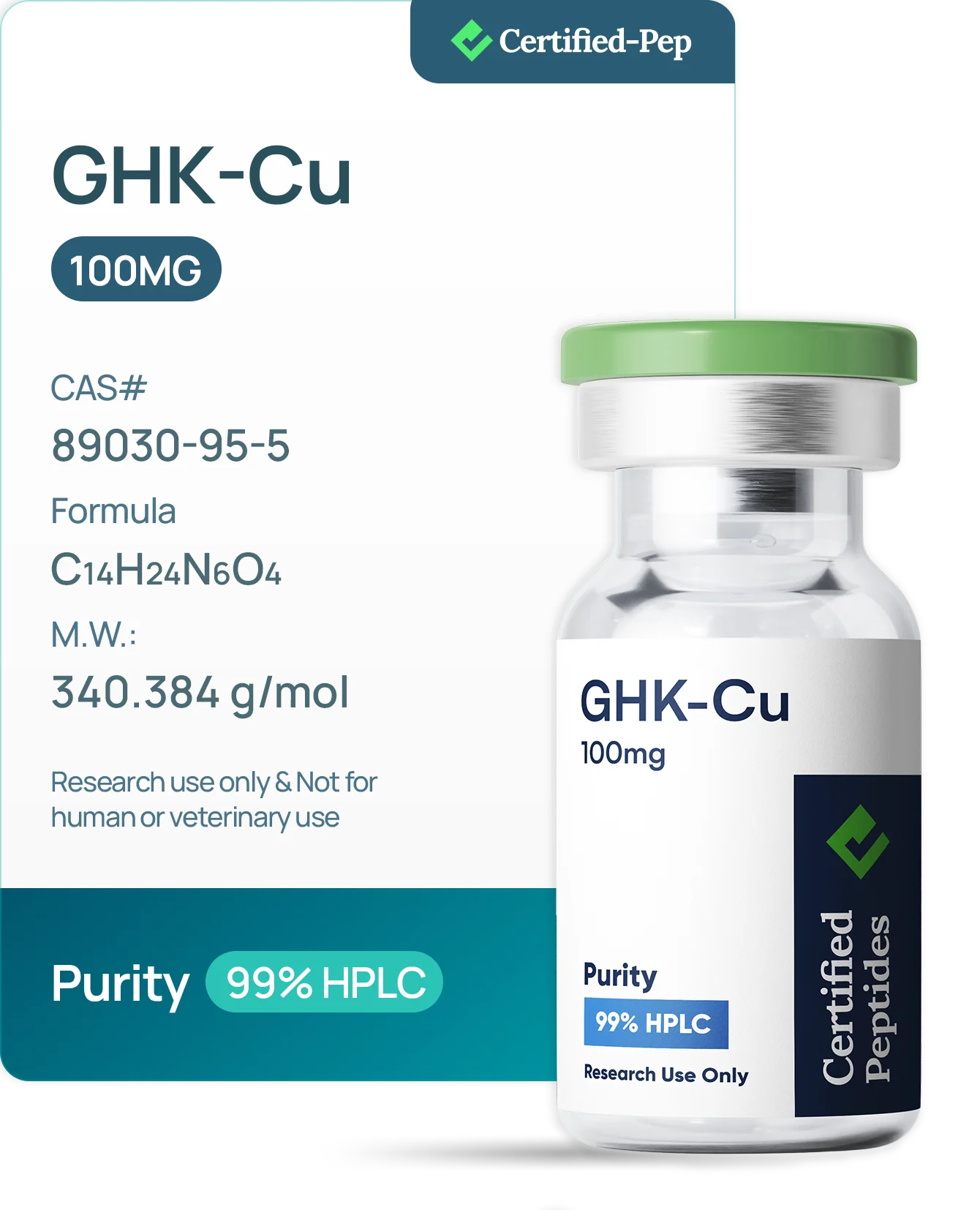
GHKCU 100 MG
USD 59.00
In stock
Last synced: 2026-09-17 09:48
Add to retailer cart ↗View product details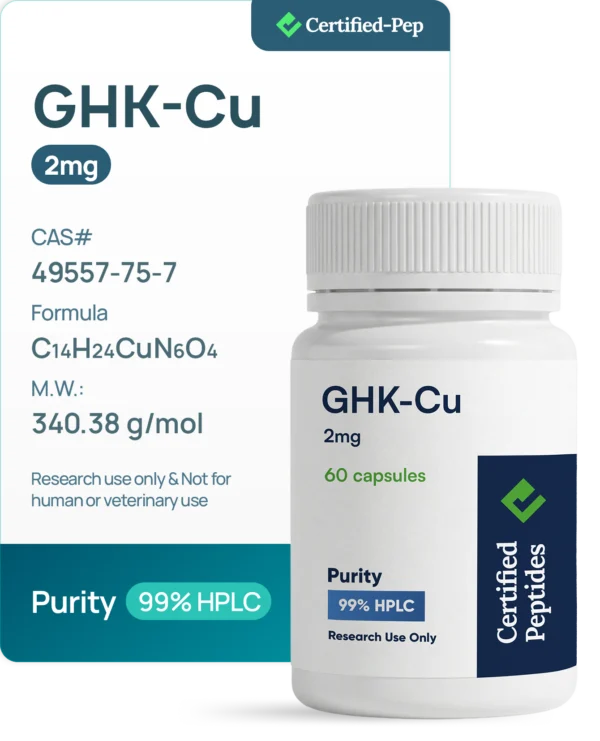
GHKCU 2MG 60 CAPSULES
USD 198.00
Out of stock
Last synced: 2026-09-17 09:48
View product ↗