
MOTS-c Research: Metabolic Signaling in Cells and Mice
Learn what a primary MOTS-c study found about metabolic signaling in cells and mice, including AMPK pathways and limits of translation to people.

Direct Answer: What Do Cell and Mouse Studies Reveal About MOTS-c and Metabolic Signaling?
Cell and mouse studies have identified MOTS-c as a mitochondrial-derived peptide (MDP) encoded within the 12S rRNA region of mitochondrial DNA. Experimental evidence demonstrates that MOTS-c regulates metabolic homeostasis by modulating the folate-methionine cycle, de novo purine biosynthesis, and activating AMP-activated protein kinase (AMPK) signaling. In vitro and in vivo models show that MOTS-c influences glucose metabolism, insulin sensitivity, and energy expenditure, particularly in skeletal muscle. However, these findings are limited to preclinical research, and no direct evidence supports MOTS-c as a proven therapy for weight loss, longevity, or metabolic diseases in humans. Translation to clinical application remains uncertain due to species differences, experimental constraints, and the absence of controlled human treatment outcomes in this paper Source 1.
Research-Reading Checklist
- Peptide Origin: Is the peptide mitochondrial-encoded or nuclear-encoded?
- Experimental Models: Are findings from cell lines, animal models, or human studies?
- Mechanistic Pathways: What metabolic pathways are implicated?
- Endpoints: What outcomes are measured (e.g., gene expression, glucose uptake, body weight)?
- Controls and Comparisons: Are there appropriate controls and mutant/scrambled peptide comparisons?
- Translational Limits: Are there species-specific effects or methodological constraints?
- Unresolved Questions: What gaps remain in understanding MOTS-c’s role in metabolism?
1. Defining MOTS-c: Mitochondrial Peptide Origin and Discovery
MOTS-c (mitochondrial open-reading-frame of the twelve S rRNA type-c) is a 16-amino acid peptide encoded by a short open reading frame (sORF) within the mitochondrial 12S rRNA gene. Unlike most mitochondrial proteins, which are nuclear-encoded and imported into mitochondria, The authors propose that a mitochondrial transcript is exported and translated using the standard genetic code; the transport and translation mechanism should not be treated as fully resolved. Its sequence is highly conserved among mammals, particularly in the first 11 residues, suggesting evolutionary pressure for functional maintenance. Experimental depletion of mitochondrial DNA in cell models (HeLa-ρ0 cells) eliminates MOTS-c expression, confirming its mitochondrial origin. MOTS-c is detectable in various tissues and in circulation in both rodents and humans, with levels modulated by metabolic states such as fasting Source 1.
Key Points
- MOTS-c is encoded within mitochondrial DNA, not the nuclear genome.
- Its expression is tissue- and state-dependent, with reductions observed during fasting and aging.
- The peptide is evolutionarily conserved, indicating a likely important physiological role.
2. Experimental Models: Cell Lines and Mouse Studies
The primary research on MOTS-c utilizes both in vitro (cell culture) and in vivo (mouse) models. Human embryonic kidney (HEK293) cells, HeLa cells, and rat L6 myotubes are commonly used for cellular studies. These models allow for overexpression or exogenous application of synthetic MOTS-c, enabling detailed analysis of metabolic pathways and gene expression changes. In vivo, outbred CD-1 and C57BL/6 mice are used to assess systemic metabolic effects, including glucose tolerance, insulin sensitivity, and responses to high-fat diets. These models provide insight into tissue-specific actions, particularly in skeletal muscle, and allow for the study of age-related changes in MOTS-c levels and function Source 1.
Key Points
- Cell models enable mechanistic studies and pathway analysis.
- Mouse models allow assessment of whole-body metabolic effects and tissue targeting.
- Both acute and chronic interventions are used to explore MOTS-c’s physiological roles.
3. Metabolic Pathways Targeted by MOTS-c: Folate Cycle, Purine Biosynthesis, and AMPK Activation
MOTS-c exerts its metabolic effects primarily by targeting the folate-methionine cycle and the directly linked de novo purine biosynthesis pathway. In cell models, MOTS-c treatment leads to decreased levels of 5-methyltetrahydrofolate (5Me-THF) and methionine, increased homocysteine, and a blockade of purine biosynthesis. This results in the accumulation of 5-aminoimidazole-4-carboxamide ribonucleotide (AICAR), a known activator of AMPK. AMPK activation is confirmed by increased phosphorylation of AMPKα and downstream acetyl-CoA carboxylase (ACC), alongside changes in pathways involved in fatty-acid metabolism. These changes promote fatty acid oxidation, glucose uptake, and energy expenditure Source 1.
Key Points
- MOTS-c inhibits the folate cycle and purine synthesis, leading to AICAR accumulation.
- AICAR activates AMPK, a central regulator of cellular energy homeostasis.
- AMPK activation shifts metabolism toward increased glucose utilization and fatty acid oxidation.
4. Cellular Effects: Gene Expression and Metabolic Flux
Microarray and metabolomic analyses in HEK293 cells treated with MOTS-c reveal significant changes in gene expression and metabolite profiles. MOTS-c alters the expression of genes involved in metabolism and inflammation, with time-dependent progression of gene signatures. Metabolomic profiling shows consistent reductions in purine and dipeptide metabolites, and increases in acylcarnitines and methionine cycle intermediates. Functionally, MOTS-c enhances glycolytic flux, as measured by extracellular acidification rate (ECAR), and increases glucose uptake and lactate production. These effects are partially reversed by folic acid supplementation, supporting the role of folate cycle inhibition in MOTS-c action. Knockdown of AMPK or SIRT1 reduces the glycolytic response, indicating their involvement in the peptide’s effects Source 1.
Key Points
- MOTS-c induces broad changes in metabolic gene expression and metabolite levels.
- Enhanced glycolysis and glucose uptake are central features of MOTS-c action in cells.
- The effects are dependent on AMPK and SIRT1 signaling pathways.
5. In Vivo Mouse Findings: Insulin Sensitivity, Glucose Homeostasis, and Energy Expenditure
In mouse models, MOTS-c administration improves glucose tolerance and insulin sensitivity, particularly in skeletal muscle. Hyperinsulinemic-euglycemic clamp studies demonstrate increased glucose infusion rates and enhanced insulin-stimulated glucose disposal in muscle, without significant effects on hepatic glucose production. MOTS-c also prevents high-fat diet-induced obesity and hyperinsulinemia, independent of changes in food intake. Treated mice exhibit increased respiratory exchange ratio (RER), indicating a shift toward carbohydrate utilization, and increased heat production, suggesting elevated energy expenditure. Notably, MOTS-c levels decline in muscle and circulation with age, and supplementation restores insulin sensitivity in aged mice Source 1.
Key Points
- MOTS-c enhances muscle insulin sensitivity and glucose uptake in mice.
- It prevents diet-induced obesity and metabolic dysfunction without reducing food intake.
- Age-related declines in MOTS-c are associated with impaired metabolic function, reversible by supplementation in mice.
6. Mechanistic Insights: Tissue Targeting and Pathway Specificity
Skeletal muscle emerges as the primary target tissue for MOTS-c action in vivo. The peptide’s effects on glucose uptake, AMPK activation, and GLUT4 expression are most pronounced in muscle, aligning with the tissue’s central role in insulin-mediated glucose disposal. Unlike metformin, which primarily targets the liver, MOTS-c’s action is muscle-centric. In vitro, MOTS-c overexpression or treatment in muscle cell lines (L6 myotubes) recapitulates the enhanced glycolytic and glucose clearance effects observed in vivo. These findings suggest tissue- and context-specific actions for mitochondrial-derived peptides, with MOTS-c acting as an endocrine-like signal from mitochondria to muscle Source 1.
Key Points
- MOTS-c’s metabolic effects are largely mediated through skeletal muscle.
- The peptide acts via AMPK and GLUT4 pathways to enhance glucose utilization.
- Tissue specificity distinguishes MOTS-c from other metabolic regulators.
7. Experimental Controls, Mutants, and Specificity
The specificity of MOTS-c’s effects is supported by the use of mutant and scrambled peptide controls. Substitution of conserved residues (e.g., E5A, G7A) or use of a scrambled sequence abrogates the metabolic effects, confirming sequence specificity. Knockdown experiments targeting AMPK and SIRT1 further delineate the signaling pathways required for MOTS-c action. These rigorous controls strengthen the mechanistic conclusions but also highlight the complexity of peptide signaling and the need for further validation in diverse models Source 1.
Key Points
- Mutant and scrambled peptide controls confirm the sequence specificity of MOTS-c’s actions.
- Pathway knockdown experiments identify AMPK and SIRT1 as partial mediators.
- Experimental rigor enhances confidence in mechanistic findings but does not guarantee translational relevance.
8. Translational Limits, Unresolved Questions, and Future Directions
Despite robust findings in cell and mouse models, significant limitations constrain the translation of MOTS-c research to human health applications. Species differences in metabolism, peptide processing, and mitochondrial genetics may limit extrapolation. The lack of targeted mitochondrial gene knockout methods restricts mechanistic dissection in vivo. The cited 2015 study does not establish human therapeutic efficacy, safety or pharmacokinetics. It is not a comprehensive assessment of all subsequent human research. The potential for off-target effects, immunogenicity, and long-term consequences is unaddressed. Unresolved questions include the regulation of MOTS-c expression, its role in other tissues, and its interactions with other mitochondrial-derived peptides and metabolic regulators Source 1.
Key Points
- Findings are limited to preclinical models; human relevance is unproven.
- Methodological constraints and species differences limit translation.
- Further research is needed to clarify regulation, safety, and broader physiological roles.
Evidence Limitations and Key Takeaways
- The intervention evidence reviewed here comes from the cited cell and mouse experiments; these findings do not establish human treatment benefits or safety.
- MOTS-c is a mitochondrial-encoded peptide that regulates metabolic pathways via the folate cycle, purine biosynthesis, and AMPK activation, primarily targeting skeletal muscle.
- Experimental controls confirm sequence specificity and implicate AMPK and SIRT1 as mediators.
- Translational application is limited by species differences, lack of human data, and methodological constraints.
- MOTS-c should not be described as a proven therapy for weight loss, longevity, or metabolic disease.
For research and educational purposes only. Not medical advice. Research products are not for human or veterinary use.
Sources
- The Mitochondrial-derived peptide MOTS-c promotes metabolic homeostasis and reduces obesity and insulin resistance - PMC. https://pmc.ncbi.nlm.nih.gov/articles/PMC4350682/
Continue exploring
TRACE THE EVIDENCE
Sources & further reading
RELATED PRODUCT INFORMATION
From the Certified Pep catalog.
Product references are informational, not a recommendation for human use. Prices and availability must be verified at retailer checkout.
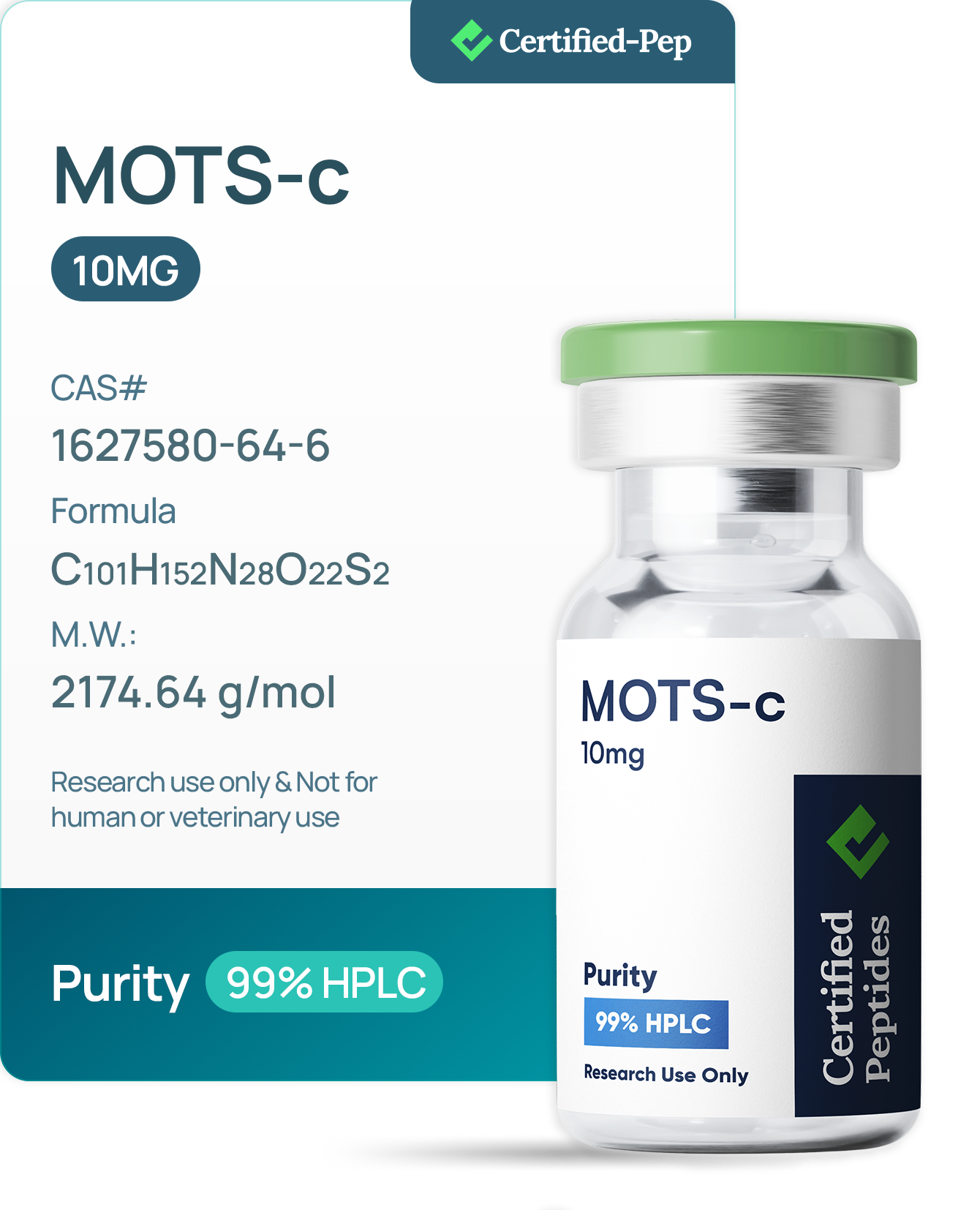
MOTS C 10MG
USD 58.00
In stock
Last synced: 2026-09-17 09:48
Add to retailer cart ↗View product details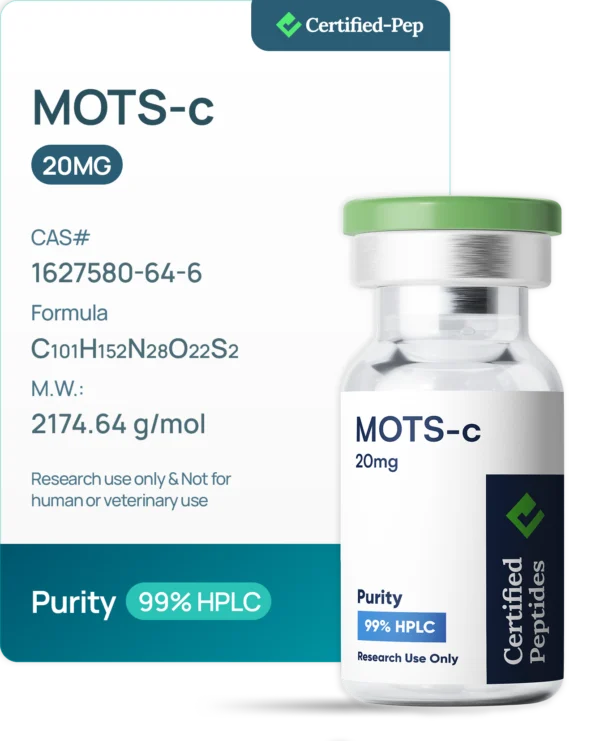
MOTS C 20MG
USD 90.00
In stock
Last synced: 2026-09-17 09:48
Add to retailer cart ↗View product details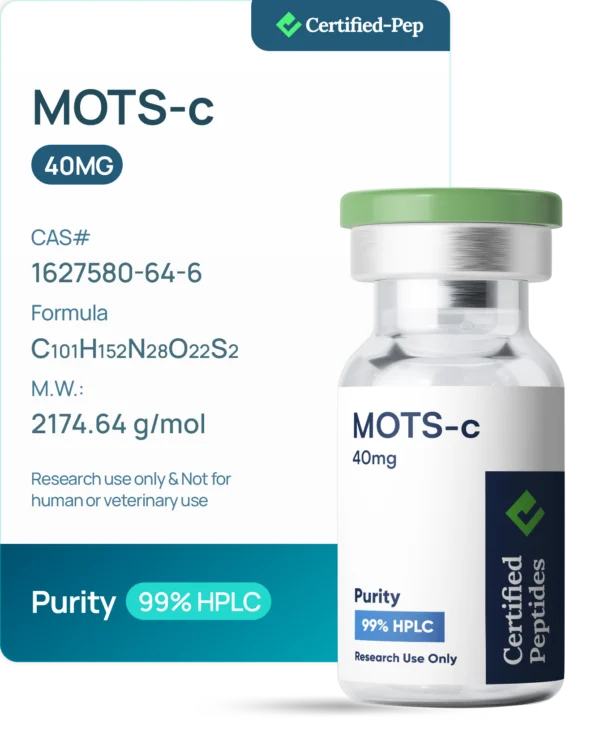
MOTS C 40MG
USD 160.00
In stock
Last synced: 2026-09-17 09:48
Add to retailer cart ↗View product details